


The survival of traditional buyside bond trading desks is becoming an increasingly contentious issue, as automation takes over routine execution and portfolio managers gain the ability to bypass specialist traders altogether.
The tension was evident at FILS Europe, where asset managers offered sharply different views on whether centralised dealing desks remain necessary, with some of the most revealing accounts coming from traders speaking without attribution.

“We realised we don’t really need that scale,” said Ling Luo, a rates strategist in State Street’s global Treasury operation, describing a move away from centralised dealing towards a hybrid model where portfolio managers frequently execute their own transactions.
Luo explained that the Treasury business typically executes large but relatively infrequent trades, making a dedicated execution team less compelling than at asset managers implementing strategies across numerous client portfolios.
The potential consequences of such changes emerged in a particularly contentious exchange involving another large buyside institution.
One participant described how automation had enabled portfolio managers to bypass the trading desk when executing liquid bonds, removing delays associated with the conventional order management process.
As the approach expanded, the firm reorganised its execution arrangements, with the speaker saying that a longstanding trading desk structure “was then discontinued”.
However, when The DESK sought clarification, the firm’s press office challenged the account.
“This is incorrect, I think it must be a misunderstanding,” a spokesperson responded. “We have had an internal reorganisation of some areas, but the trading desk has not been closed down.”
The apparent contradiction underlines the sensitivities surrounding automation and what it means for the future of specialist dealing teams.
The stakes are particularly high as major asset managers consolidate their trading operations. As The DESK reported ahead of FILS Europe, BNP Paribas Asset Management is integrating the former AXA Investment Managers trading business, bringing together two execution hubs and combining their technology and workflows.
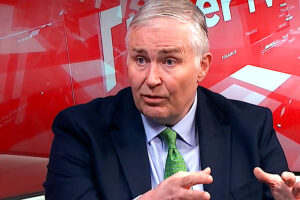
Yet Lee Sanders of BNP Paribas AM strongly defended the continued need for human traders, describing the idea of replacing voice execution entirely with automation as a “myth”.
Darren Moore, head of EMEA credit trading at Legal & General Asset Management, which manages £1.22 trillion, was similarly emphatic about retaining a central dealing operation.
“It’s everything, and that’s largely driven by scale,” he said, explaining that the complexity of trading across multiple investment mandates makes it difficult for portfolio managers to assume responsibility for execution as well.
However, Moore acknowledged that the trading function itself is changing, with dealers increasingly involved in investment discussions before orders reach the order management system.
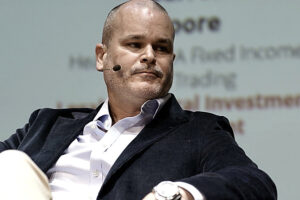
“We play a relatively full part in the investment lifecycle,” he said.
The pressure to automate is nevertheless formidable.
One buyside trader described how their firm had already automated 80% to 90% of rates execution, although the proportion remained considerably lower in credit and emerging markets.
The trader argued that automation should free dealing teams to concentrate on more complicated transactions, where market impact, liquidity and relationships with banks can make a substantial difference to execution quality.
But that also raises an uncomfortable question: if algorithms can handle most routine transactions, how many human traders are needed to manage the exceptions?
Another participant warned that the increasing use of artificial intelligence could blur accountability, particularly if models were allowed to make live execution decisions that their human supervisors could not adequately explain.
For defenders of the traditional desk, this is where specialist traders retain their advantage.
Moore said one of the biggest challenges remained managing the expectations of portfolio managers, who do not necessarily have access to the same market intelligence as traders.
“We do have access to more data on the trading desk,” he said, citing liquidity information, dealer axes and market positioning.
Those capabilities become especially important when trading large blocks or navigating volatile markets where electronic prices may not represent executable liquidity.
Even so, automation is shifting the balance of power between portfolio managers, technologists and traders.
One unnamed participant offered a reassuring interpretation: “The trader role isn’t really going away; it’s just changing.”
For fixed-income traders whose traditional execution responsibilities are disappearing into automated workflows, demonstrating what remains uniquely valuable about their expertise could become a fight for professional survival.
©Markets Media Europe 2026