



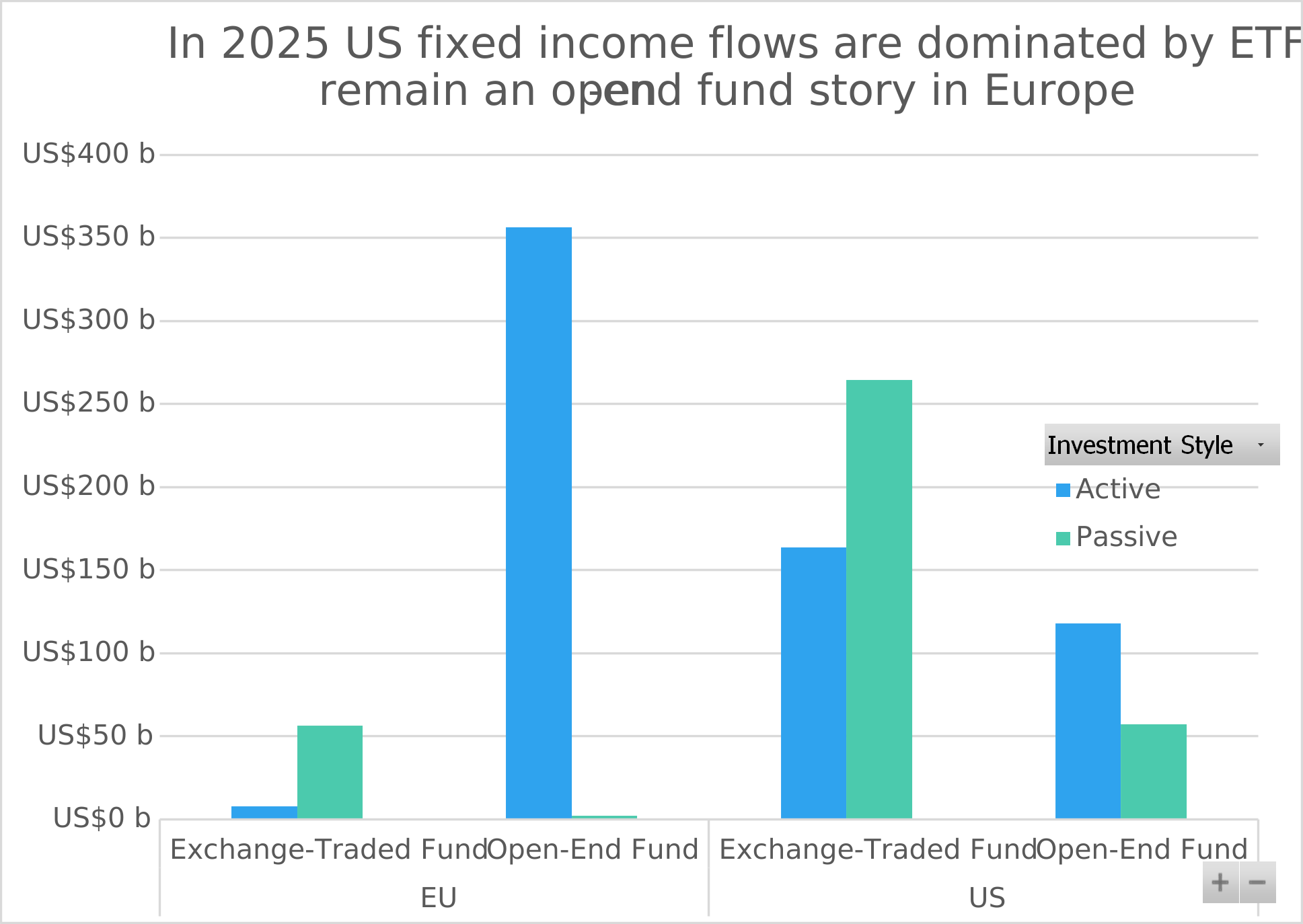
European fixed income fund flows remain structurally different from the US, materially affecting trading flows during the day. In 2025, 84% of Europe’s US$422.7bn net inflows went to active open-ended funds. US flows were very different: 71% of its US$603.1bn fixed income inflows went to exchange traded funds (ETFs), with passive strategies taking 62% of US fixed income ETF flows.

“Europe’s fixed‑income flows are still led by active funds, while the US is heavily influenced by passive and ETF demand — and that shows up clearly in how clients trade on MarketAxess,” says Gareth Coltman, head of products, EMEA and APAC at MarketAxess.
Europe’s bond-fund market is still built around the open-ended, active format vehicles. Morningstar flow data for 2025 show European fixed income products gathered US$422.7bn of net inflows in 2025. US$358.4bn of that total went into open-ended funds while US$64.3bn went into ETFs.
European fixed income flows were dominated by active styled strategies at US$364.1bn into active strategies (about 86%) and US$58.6bn into passive (about 14%). 98% of these flows were raised by open end funds.
“In Europe, there is a higher relative share of active management, while active management in the US still represents enormous AUM in global terms,” notes Coltman. “Active managers, whether in the US or Europe, tend to trade more selectively – focusing on price discovery, counterparty selection and protocol choice to reduce market impact and generate alpha. They are relying heavily on our AI‑powered analytics and Open Trading to source liquidity across fragmented markets and to optimise execution using data.”
US fixed income inflows looked diametrically different. They totalled US$603.1bn in 2025, and US$427.8bn, or 71% went into ETFs, with US$175.2bn into open-ended funds. Passive strategies gathered US$321.5bn, or 53% of US fixed income inflows. Passive ETFs, in particular, took in US$264.3bn, representing 62% of US fixed income ETF flows.
“In the US, strong ETF inflows drive larger, more systematic portfolio trades and big lists, with high overlap between these baskets and major exchange traded funds like LQD and HYG,” notes Coltman. “Our clients use MarketAxess because the platform offers the scale, automation and deep liquidity needed to move sizeable index‑linked flows efficiently.”
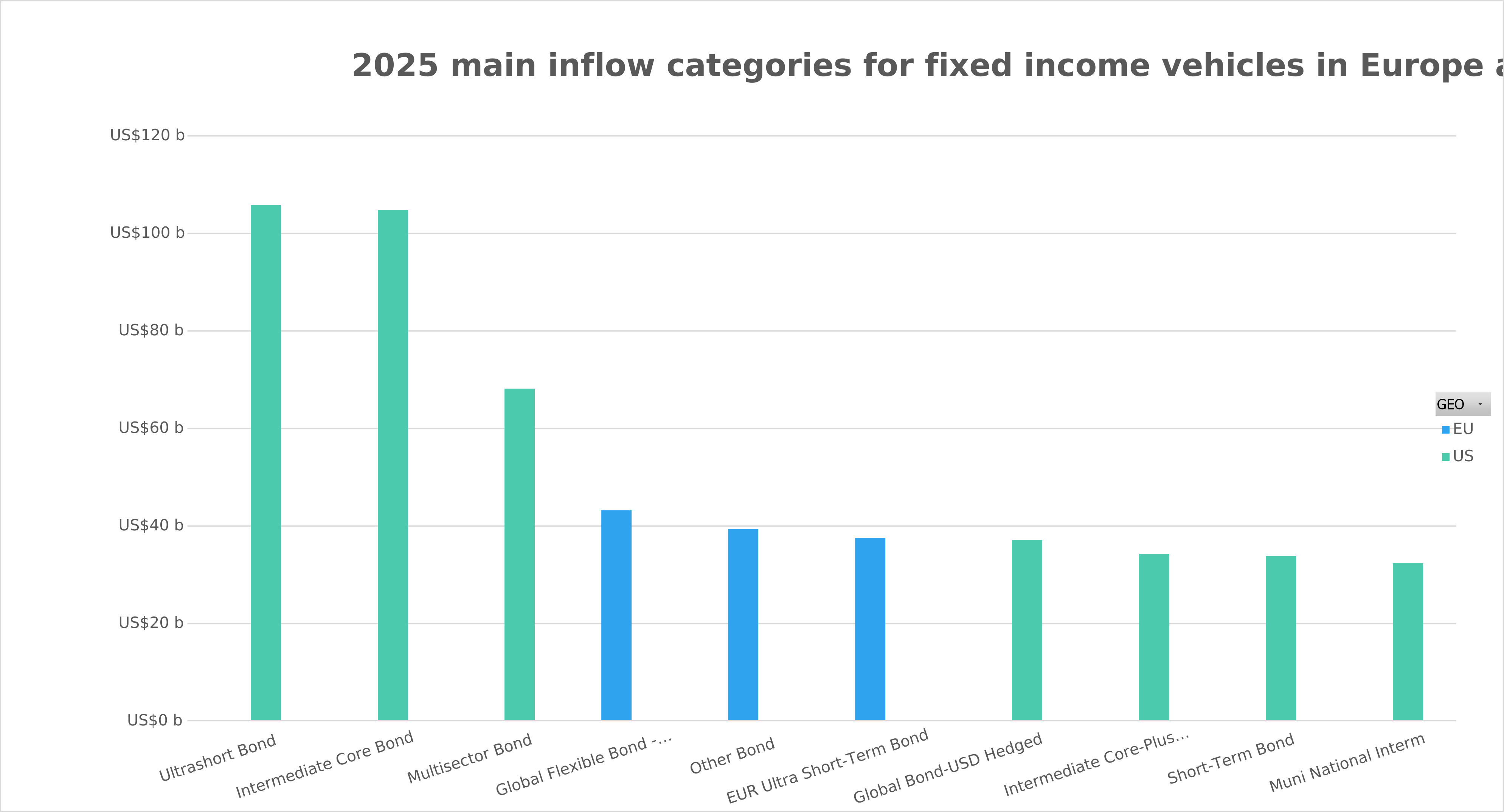
US bond inflows in 2025 were concentrated in cash substitutes and broad benchmark exposure. Ultrashort term bond vehicles took in US$105.9bn/ According to Morningstar, most of these defensive flows were concentrated in the 3 months following “Liberation Day”; Ultrashort bonds typically invest in short term fixed income product such as Treasury bills, agency bills and high-quality money-market style paper used for parking cash.
The second largest inflow category, intermediate core bond funds, was also defensive at US$104.9bn. According to a Blackrock prospectus, “core and core-plus bonds are typically intermediate term bonds used in portfolios to potentially mitigate downside losses when stocks sell off. They also have the ability to offer consistent income.”
Sizeable allocations also went to the multisector bond category, which can invest in a range of fixed income product to reflect relative value, atUS$68.2bn.
In Europe, on the other hand, fixed income demand was channelled mostly through manager-led, outcome-oriented mandates, often with a currency hedge mandate.
The largest inflow category was global flexible bond, US dollar hedged, at US$43.2bn. These funds can invest across global rates and credit but explicitly have to hedge out their dollar exposure for European investors. After that the main inflow categories were categorised as “other fund” with broad active mandates at US$39.3bn, followed by EUR ultrashort at US$37.5bn, the equivalent defensive EUR cash equivalent as the similar inflows seen in the US.
Flows also went to another defensive category with EUR diversified bond, short-term gathering US$29 bn, with mandates to invest in short-duration mixes of sovereigns, agencies and investment-grade credit, finally wider mandates of EUR corporate bond gathered US$22.5bn.
Issuer concentration was notable in the European fixed income ETF landscape. OF the US$64.3 bn collected by fixed income ETF in Europe, Blackrock’s iShares alone gathered US$36.0bn or about 56% of the total.
The US fixed income ETF market is much broader: iShares led inflows with US$136.9bn, but that is 32% of US fixed income ETF inflows, with the rest spread across Vanguard at US$90.1bn, JPMorgan at US$31.9bn, and others.
©Markets Media Europe 2025