



Front-month ten-year Japanese Government Bonds (JGBs) futures are down 7% since early 2025 as volumes spike on down days, while the 10-year yield has punched to multi-decade highs ahead of the 8 February lower-house election. This one-way market still hasn’t had any visible risk-off contagion effect.
Japan’s government bond selloff is accelerating into the 8 February lower-house election, with front-month JGB futures sliding further in 2026.
Toshifumi Niwa, head trader at Nissay Asset Management, told The Desk: “Following recent election-related headlines, volatility in the cash JGB market has increased, and it has become difficult to show firm prices even in electronic trading of cash JGBs.”
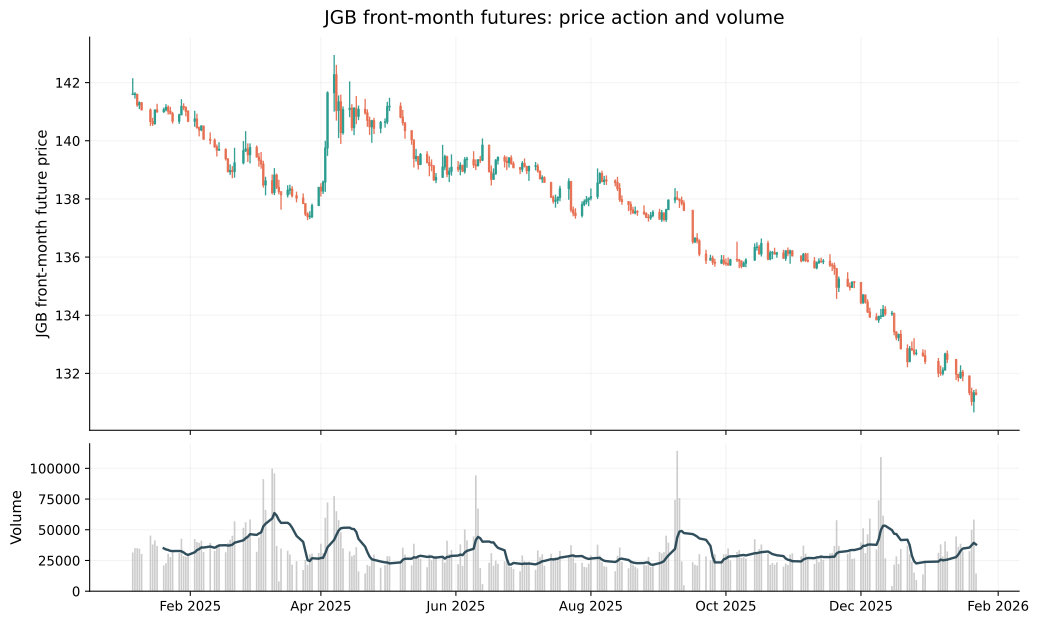
Front-month JGB futures have dropped from 141.59 on 6 January 2025 to 131.27 on 20 January. The decline has been one-way. Average daily volume (ADV) over the period is 33k contracts, or about US$300 million notional. Multiple sessions outside of roll days, when market participants exchange their front month position in the expiring contract for the next expiry and which are typically heavy trading days, have seen a large spike in volume above 50k contracts on down and reversal days.
Niwa said: “JGB futures volatility has also been elevated, and screen depth in futures has remained thin. In response, the JGB interdealer market has tended to be thin and one-sided, and the number of issues with quotes appears to have declined.”
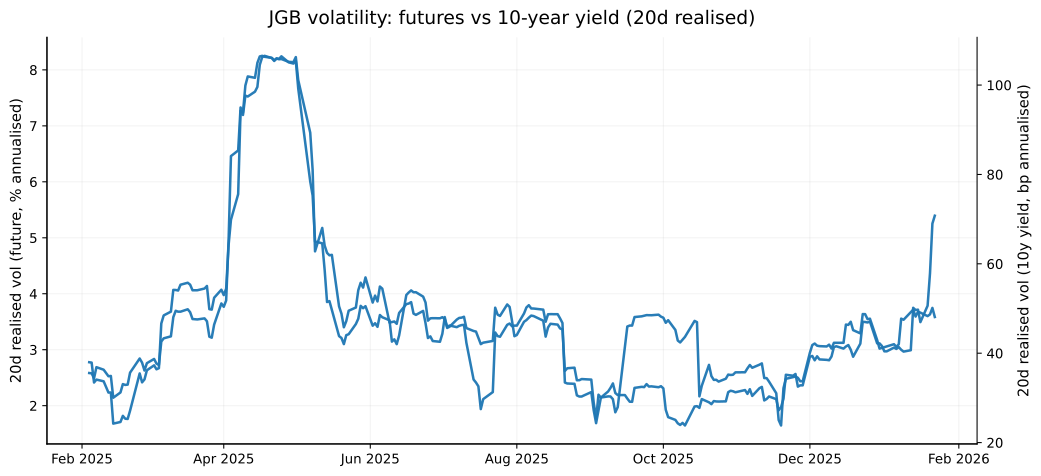
20-day realised volatility in JGB yield and corresponding futures is on the rise, with both measures creeping back up to levels last seen during the “liberation day” stress episode last April.
The 10-year yield itself has decisively cleared 2% and hit 2.38% intraday this week, a 27-year high. The long end, because of its duration, has seen even wilder moves; 20-year yields jumped above 3.4%, while 30- and 40-year yields briefly breached 3.8% and 4%, after absolute yield moves of 28 and 40 basis points in two days (0.28-0.40 percentage points).
For not-so-young macro traders, this reversal comes after years where the “widow-maker trade” was to short JGBs on the assumption that Japan’s debt fundamentals would force yields higher, only to watch yields grind lower for decades, wiping out anyone who fought the Bank of Japan’s balance sheet. The BOJ stopped growing its balance sheet in 2021 in dollar terms, and in 2022 (after COVID) in yen terms.
Read more: Human battles machine in JGB market.
Recent political developments are accelerating the potentially inflationary dynamics. Prime Minister Sanae Takaichi has called the 8 February election as parties lean into tax cuts and spending pledges. Fitch says the election-linked fiscal expansion is being watched but remains consistent with its A rating and stable outlook for Japan; S&P rates Japan A+ (stable), and Moody’s keeps it at A1 (stable).
Yet bond vigilantes have plenty to ponder. IMF data put Japan’s general government gross debt at 237% of GDP in 2025, versus 121% for the US, 101% for the UK, 113% for France, 135% for Italy and about 64% for Germany. Modest yield shifts have a large impact on the potential coverage ratio.
Yet, data sourced from the Japanese Securities Dealers Association and Tradeweb shows that rather than stress yield spreads have contracted on average in 2025 as volumes have stayed elevated in the cash market.
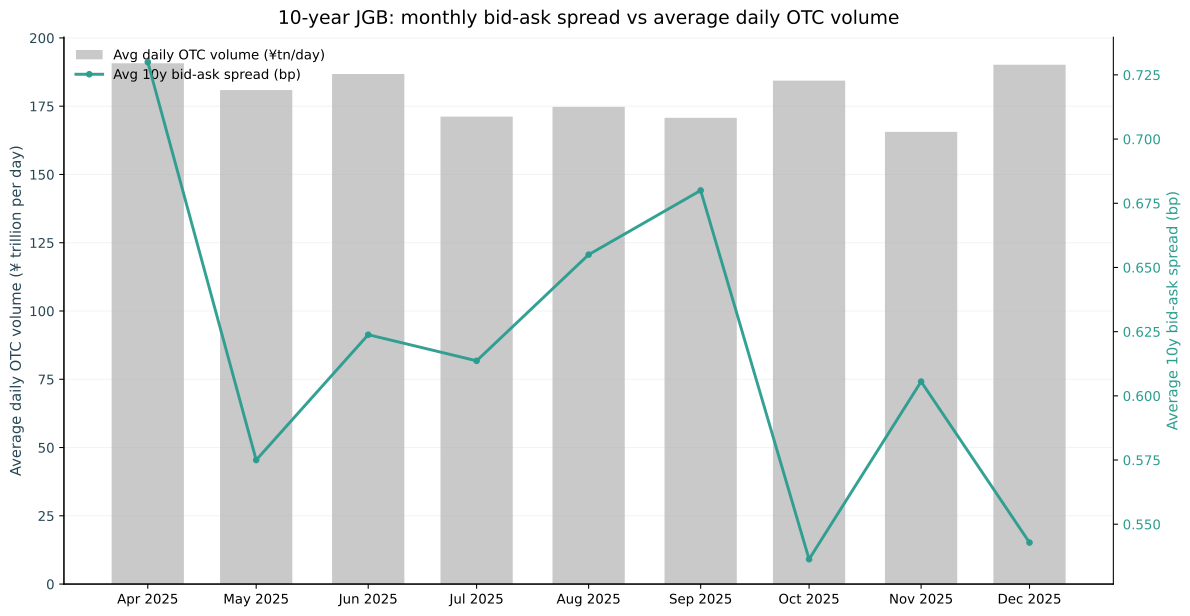
This average viewpoint is very different from the daily stress experienced by Japanese dealers.
Niwa said: “In dealer to customer electronic reauest for quote (RFQ) flow for JGBs, these conditions [current selloff] led to materially wider prices; at times, execution was difficult on both price and size. With higher volatility, many dealers turned off auto‑pricing or set it extremely wide, increasing the share of manual quoting; that also contributed to the conditions.”
The Japanese Ministry of Finance draft FY2026 budget raised the assumed interest rate used for debt-service projections to 3.0%, the highest in nearly three decades and has debt-servicing costs at ¥31.3 trillion, up 10.8% year-on-year. Against a general-account budget of ¥122.3 trillion, debt service is now a quarter of planned spending
So why has the one-way JGB market not yet meaningfully impacted global risk assets? Macro managers told The Desk that spillovers tend to arrive through funding and hedging channels first. Repatriation by Japanese investors is typically staggered and often hedged, so the impact shows up in the marginal price of duration and in cross-market funding rather than in an immediate risk assets’ drawdown.
Another macro hedge fund manager also told us global markets have lived with higher rates elsewhere, and the absolute yield is not yet screaming danger.
©Markets Media Europe 2026