




When comparing liquidity across markets in 2025, buy-side bond traders may consider European investment grade markets to have an optimal set of characteristics. However, that warrants deeper analysis.
Looking at MarketAxess data from its TraX dataset and its composite pricing tool CP+, a comparison of trading of high yield and investment grade and high yield corporate bonds in US and European markets, and USD emerging markets bonds, creates an interesting picture.
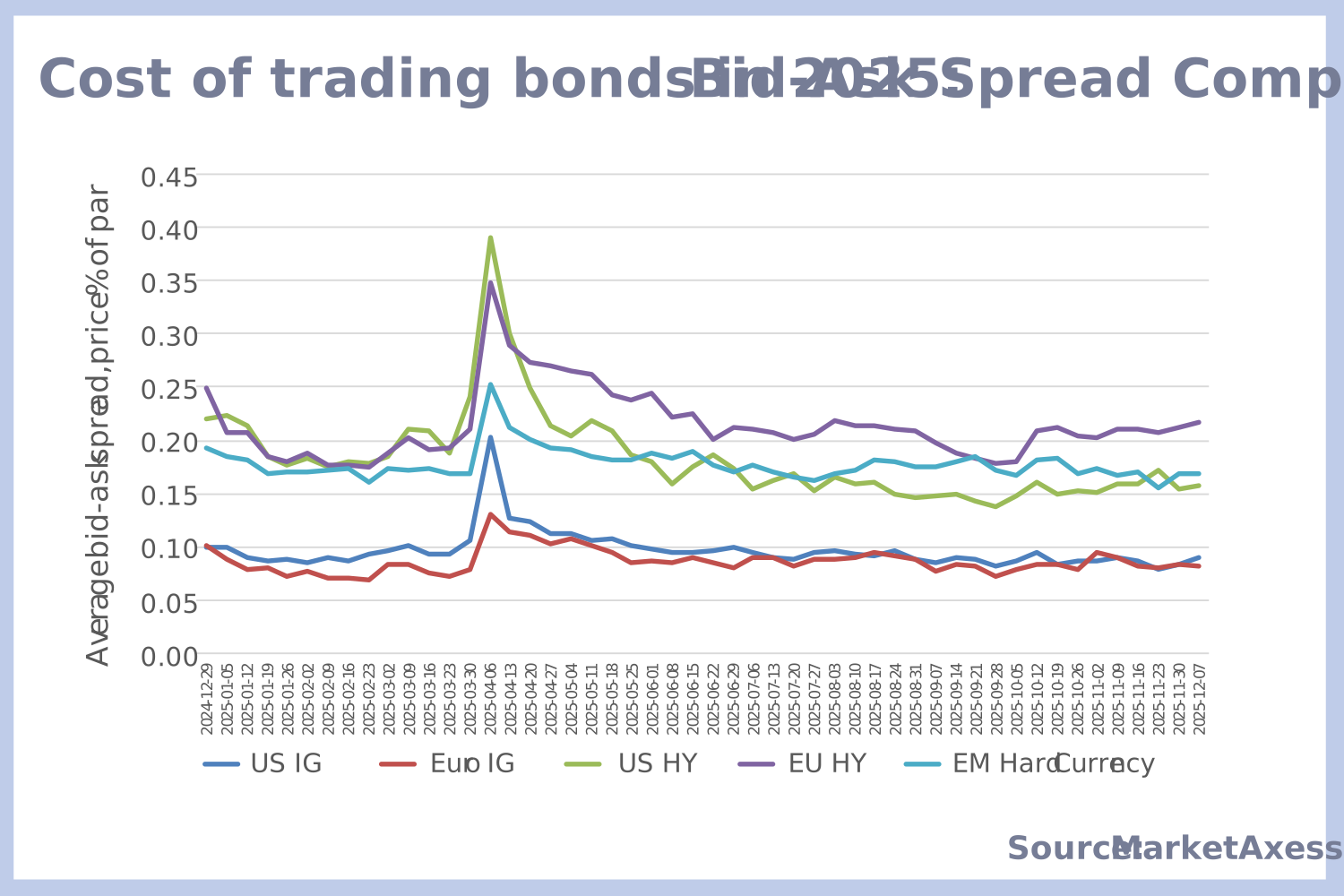
For example, the ranges of bid-ask spreads were widest across US high yield (HY) this year, with 0.25 cents, where US investment grade (IG) had a range of 0.12 cents. For comparison, emerging markets (EM) was trading in a range of 0.10 cents. In Europe, bid-ask spreads were 0.06 cents for IG and 0.17 for HY (0.07/0.20 currency adjusted to USD). That made bid-ask spreads more volatile in US markets than in any other.
The overall bid-ask spread levels were higher in Euro HY at an average of 0.21 cents over the year, where both US HY and EM were averaging 0.18 cents. US and Euro IG came in at an average of 0.10 and 0.09 (0.10 adjusted to US$) cents respectively.
Overall then, euro HY looks expensive to trade, EM looks relatively cheap to trade, and US markets needed careful timing to pick the best points to trade in a wide range.
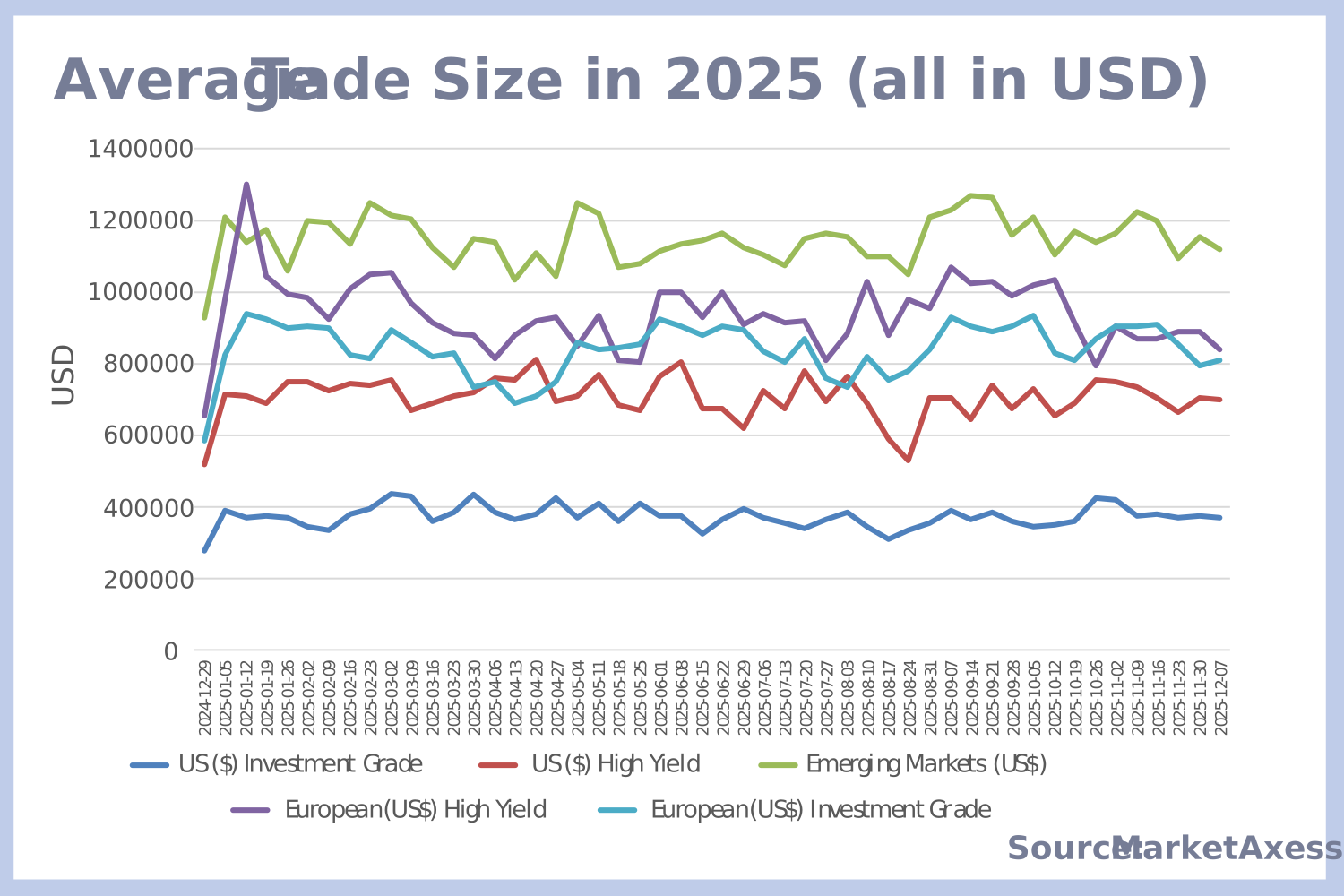
If we look at average trade sizes, year-to-date and all adjusted to US$, European HY has seen the greatest range of US$646k across the year. That is nearly double the range of trade sizes for both European IG and EM bonds.
It is also more than double the range for US HY and four times that of US IG, implying that European HY has seen highly variable levels of risk provision and demand over the year, with a broader range of trading protocols potentially being most effective for getting best execution.
Average trade sizes were largest in EM trading at US$1.1 million, followed by euro HY at US$937k and then euro IG at US$838. US credit markets show the lowest average trade sizes with US$704k for HY and just US$372k for IG.
It might be tempting to see the larger trade sizes and tighter bid-ask spreads in European IG as a reflection of less expensive risk transfer. However, US IG markets are transferring an average of 3.5x greater value on a weekly basis at far smaller trade sizes, at half the average trade size.
Consequently, the friction of trading in US markets is lower in relative terms, requiring less capital commitment from dealers, and likely a greater use of electronic trading protocols, which will potentially reduce implicit trading costs around information leakage and opportunity cost, which are increased by slower, more capital-intensive trading.
All of this demonstrates the inherent value of great trading data and the potential for greater trade optimisation that sophisticated execution analytics offer trading desks, through both commercial and internal data sets.
©Markets Media Europe 2025