




The Iran war is clearly visible in parts of corporate bond pricing and emerging market trade sizes, but other parts of the market appear more protected, for the moment.
“Despite the macro headwinds weighing on rates and equities, US investment grade (IG) remained relatively insulated last week, with spreads tightening by 2 basis points (bps), resulting in excess returns of 0.2%,” noted Morgan Stanley Research in its latest note on credit markets.
Markets are impacted based on a range of macro factors including energy import/export profiles and likely inflation effects from the Middle East conflict.
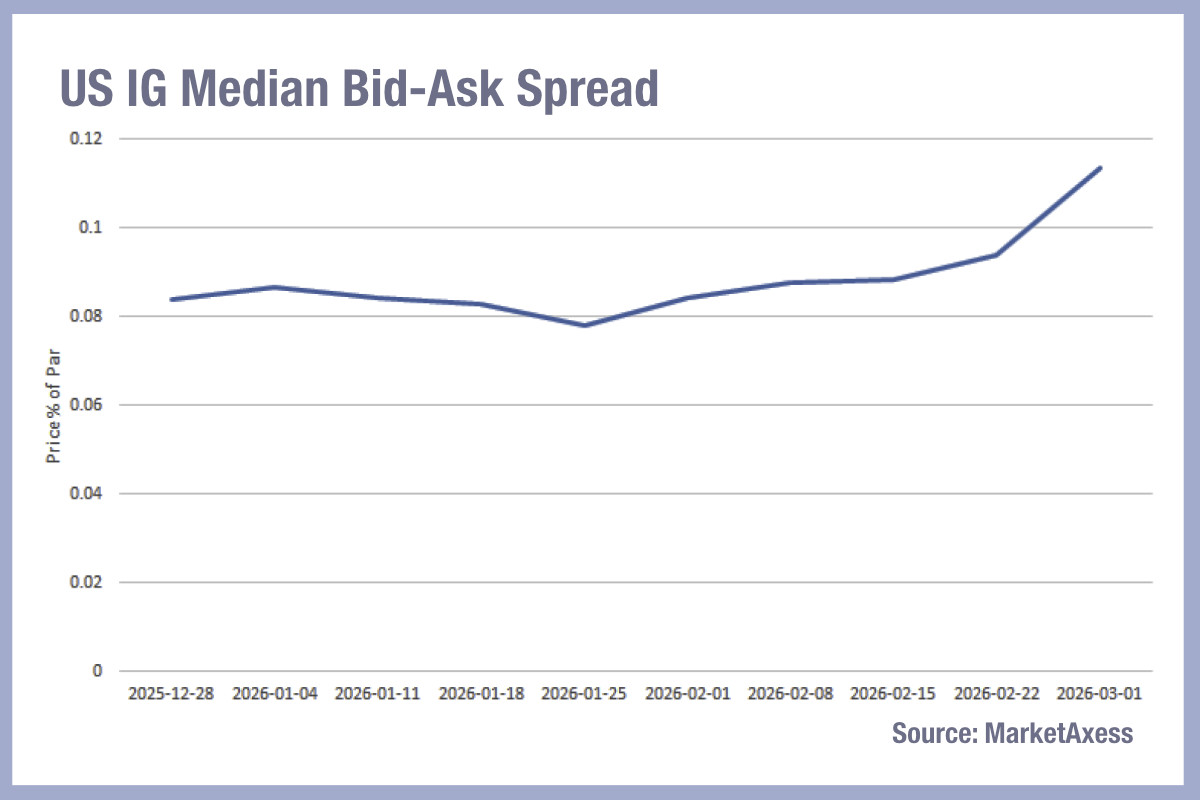
Looking at MarketAxess data on bid-ask spreads in US IG, we can see the cost of trading rising steeply in the spreads being executed, which reflects the increasing cost of carrying risk in the market.
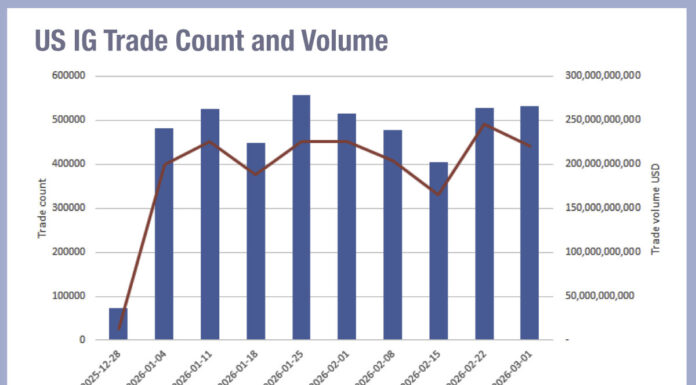
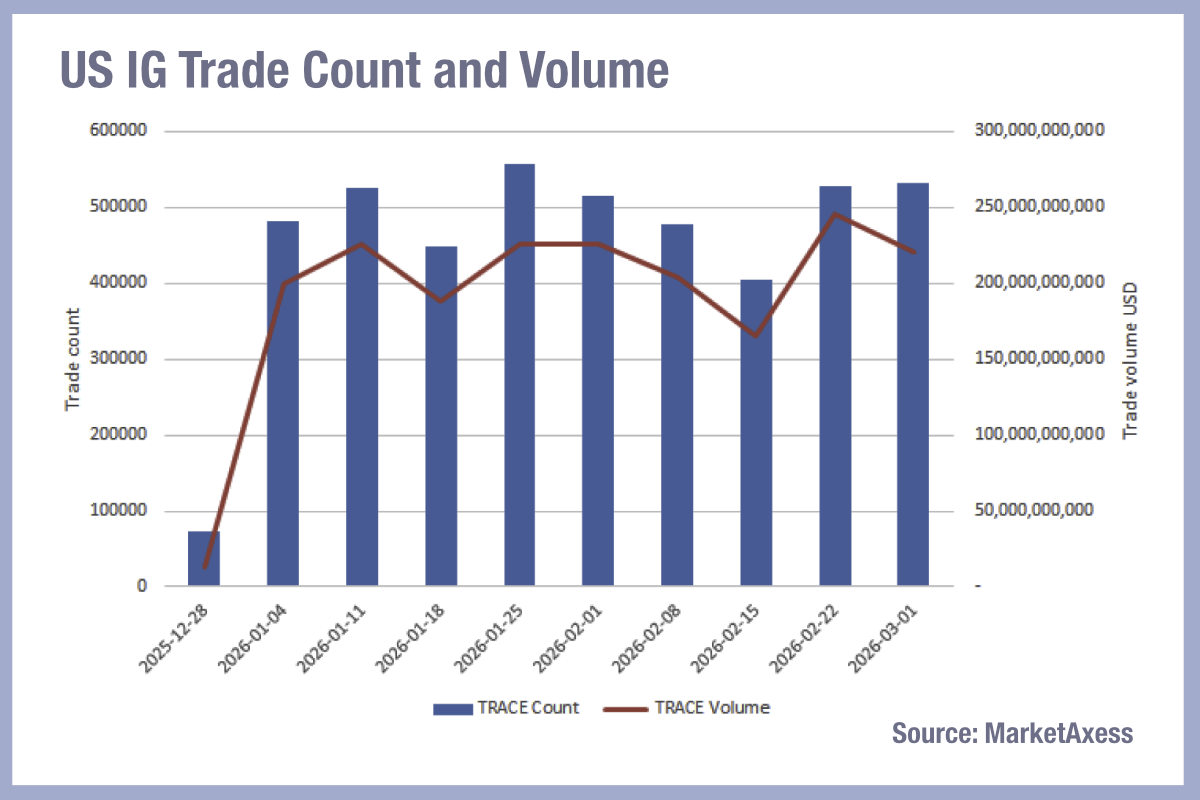 Looking at TRACE data for US market activity, filtered by MarketAxess for quality, it is clear that trade count is slightly elevated but volume ticked lower last week.
However, both the volume and count is still within range of normal activity for 2026.
With uncertainty hitting supply chains, the pressure on financing will not be immediate across borrowers, and as a result the dynamics that affect bond prices and credit rating, and therefore drive trading activity, will also be dispersed.
Trading desks will prove incredibly valuable to portfolio managers in this uncertain environment. Being the eyes on the market, traders will be assessing how and when to move in and out of positions that could become stressed in short order.
Building pictures from pre-trade data and market colour from dealers will allow traders to better inform the investment teams and minimise the already expanding costs of trading. Consequently, investors are likely to see a direct correlation between the quality of traders and the impact on the costs of portfolio ownership.
©Markets Media Europe 2025