



The Stockholm-based event gathered leaders from all corners of the industry to discuss Europe’s liquidity landscape, emerging technologies, and the future of market structure.
On 11 November, 2025, Virtu Financial hosted its third annual Virtu Winter Conference in Stockholm, welcoming more than 200 senior figures from across global markets, bringing together the buy side, sell side, exchanges, and technology firms. Over the course of the day, attendees explored major themes shaping the industry—from market structure, regulation, exchange-traded funds (ETFs), crypto, and the evolving role of artificial intelligence (AI).
Pegah Esmaeili, EMEA head of Virtu Technology Solutions and head of Nordic Region began her introductory remarks with a message saying, “True progress happens in collaboration”.
“That is exactly the reason we’re here today, and what the framework of this conference is built on,” Esmaeili said. “To share our perspectives, to challenge each other, and look ahead to where the market is heading, and to work together to get there. This is not about competition. It is about collaboration.”
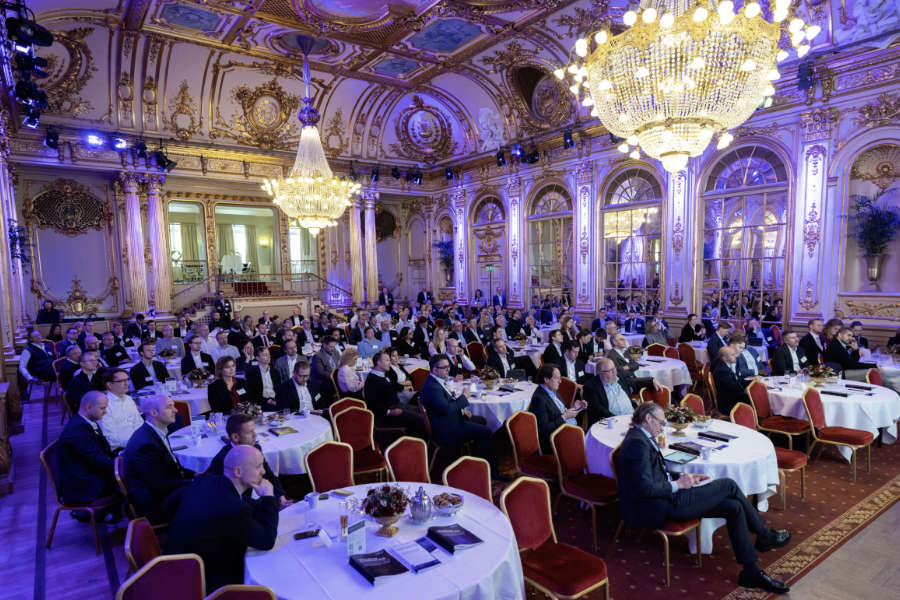
Since launching in 2022, the Virtu Winter Conference has seen significant year-on-year growth, reaching over 200 attendees this November at the Grand Hotel in Stockholm, and featuring a lineup of diverse speakers and topics. Each year, the event creates a forum for industry professionals to connect, discuss challenges, share expertise, and cultivate ideas.
“For years, we have focused on making market participation simpler, smarter, transparent, and more connected, and the conference became a natural extension of that work. It gives the market a place to meet, exchange ideas, and constructively challenge each other,” Esmaeili said on the sidelines of the event.
European Competitiveness
A central theme at this year’s conference scrutinized Europe’s competitive standing on a global stage. During the Global Markets 2025 panel discussion, speakers from exchanges, brokers, and retail platforms examined critical issues including liquidity challenges, overnight trading, and the growing sophistication of the retail investor community.
A core portion of the global markets debate, which ran through many of the discussions that day, focused on European market fragmentation and the need for regulatory simplification. Speakers discussed the challenges and market frictions created by complex cross-border regulations, the inefficiencies arising from 27 different state regulatory regimes, and the variable approaches to listing bonds or equities on secondary markets.
“All the issuer associations agree there’s too much regulation, and Europe is the best in regulation, but we need to simplify that,” said Roland Chai, president of European Market Structure at Nasdaq. “I think there’s an understanding, both in Sweden and also in the commission, that we have to make it easier for companies to operate in Europe.”
There are several regulatory reforms in the European Union underway in a bid to tackle the European market challenges. Among them are the Listing Act, which seeks to increase the attractiveness of the EU markets, simplify the listing requirements, and promote better access to public capital markets for EU companies.
Panellists noted that an update on regulatory reforms could arrive as early as December 2025.
Turning Fragmentation Into Opportunity
While market fragmentation is a pain point for European investors, some believe it has forced trading desks, brokers, venues, and tech firms to become more innovative.
On the Future of Alpha panel, speakers examined how execution needs have adapted in response, where buy-side desks are seeking better liquidity tools, algos, trading incentives, competitive pricing, and access to various venues and product types.
One panellist, an equities specialist at a large European hedge fund, said that historically, execution and investment strategies focused on what you traded, whereas now the opportunity lies in how and when you execute those assets.
“The growth of […] execution as an art, if you like, is a big focus,” the equities specialist said. “And the fragmentation and different exchanges really allow exchanges to focus on what’s important for the person seeking the execution. You can go to exchanges where you get rebates, and exchanges where the price is not sensitive to the size. So a lot of focus now is on ensuring that you get the kind of tailor-made exposure to the underlying, either as cheaply as you can or with as much size at a minimum impact as you can.”
A shared view among the panellists was that while fragmentation creates major inefficiencies for the industry, it has propelled the development of tailor-made product types and innovations — ones that provide buy sides with greater optionality for executing and managing exposure to market risks. Key examples the panellist pointed to was the growth of zero-day dated options (0DTE) and the acceleration of ETFs.
Coupled with the demand for innovations is the growing need for better access to existing liquidity pools. A central challenge among buy-side firms in Europe.
“I would say that the increased fragmentation also means that there is an increased need for having access to different trading venues,” said Per Haldén, chief investment officer at Ruth Asset Management. “For us, on a relative basis, being a quite small firm, we are very much dependent on working together with good brokers to get that access to liquidity.”
Costs and Performance
Transaction cost analysis and measuring execution quality are central to a buy-side desk’s workflow.
Speakers highlighted the difficulties that remain in trying to calculate the true cost and performance of trades, discussing the complex nuances of different asset classes, variable methodologies, and ongoing progress in creating standardization across products.
One consensus among panellists was that TCA in equities, data transparency, and accessibility is still far superior and more sophisticated than that of other asset types like fixed income and FX.
“Bond market pricing, the mid-point, and calculating market impact often rely on ‘estimates’ and require trader intuition”, said Petros Kyliakoudis, head of trading research and analytics at Baillie Gifford.
Panellists discussed the value of using variable data sizes and examining data across variable time horizons — day-to-day trade data or multi-day trades — to gain a more accurate picture of trade execution quality.
The session also examined how technology and transaction cost modelling has evolved in recent years.
Andrew Dow, head of analytics client services EMEA at Virtu Financial, highlighted the shifting needs of buy-side firms. Traditionally, TCA methods focused on assessing realised transaction costs and comparing them to estimates. Today, however, models have become far more sophisticated.
“Asset managers now benefit from advanced analytics that break down costs into components such as own impact, momentum, and other factors, and can even simulate trading costs as if an alternative strategy had been implemented. Combined with the adoption of APIs, these enhanced analytical capabilities can transform TCA programs from basic cost reporting tools into engines for strategic optimisation,” Dow said.
During the discussion, audience members were also prompted to answer a multiple-choice question asking: Which factor has the greatest influence on whether flow is routed to light touch versus high touch?
The results showed that, regarding flow routing decisions, 57% relied on trader experience, 30% used a rules-based approach, 11% followed client instructions, and 2% used post-trade TCA feedback.
As new tech and data analytics continue to evolve, several speakers also emphasised the growing interest in exploring new tools that could bridge the gaps when measuring cost and performance.
Among these are sophisticated execution models, simulation tools, and, notably, or AI-driven analytics.
The Future of Finance
The final sessions explored the future of finance and the impact of new technologies. Some discussions examined the growing institutional appetite for exposure to digital assets, rising sophistication in retail trading, and the ongoing debate around extending trading hours.
The dominant theme, however, was the impact of AI and how transformative a role the tech will play across the trading and investment lifecycle over the next several years.
Speaking on the ‘Who Owns the Future?’ panel, industry leaders discussed the balance between AI automation and human oversight, highlighting that companies are now shifting beyond efficiency gains toward productivity, and any progress requires collaboration among market participants, regulators, and the providers of the technology.
“What we think is super interesting is going to that next wave, instead of just [looking at] inefficiencies in the organization, but creating new experiences and being competitive in that sense, especially for the next generation,” said Emma Hernmarck, go-to-market (GTM) Director at ElevenLabs, a provider of AI voice and agent technologies.
As the tech evolves, speakers also emphasized the importance of responsible governance, security, and transparency as adoption accelerates.
The event shifted gears and concluded with a Q&A featuring Swedish footballer and ex-Manchester United winger, Jesper Blomqvist. The former midfielder reflected on his long and successful sports career, sharing insights about his experience of competing at the highest levels of professional sports, influential teammates and coaches, and lessons he learned along the way.

©Markets Media Europe 2025