



Technology, Efficiency, and the Rise of Liquidity Outsourcing

By Tim Whipman, Head of Business Development at TransFICC
This article is the first in a quarterly series examining how the Fixed Income market structure is evolving and the increasing role that technology plays in reshaping the landscape. While Fixed Income has been undergoing change for many years, the pace has accelerated sharply as dealers, buy-side firms, and new entrants have turned to technology to manage complexity, increase efficiency, and compete in an environment defined by data, speed, and automation.
The shift mirrors a transformation that began more than 25 years ago in the FX market. In FX, dealers adopted trading technology capable of pricing, managing credit, assessing inventory, calculating risk, and automating the booking of large volumes of RFQs. The Fixed Income market is now following a similar trajectory, although the journey has been delayed due to more intricate workflows and the diversity of asset structures across rates, credit, IRS, CDS, MBS, Munis and other products.
Drivers of Market Change
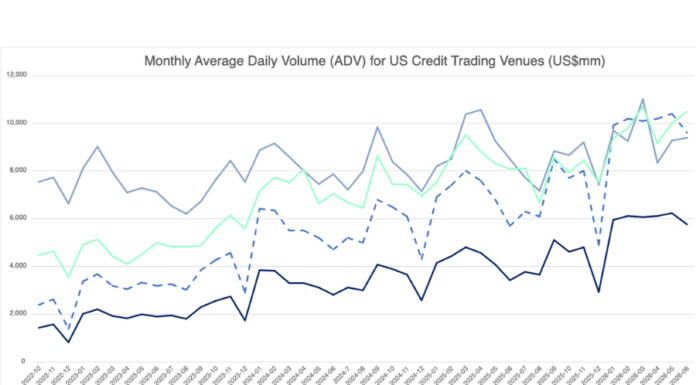
Multiple forces are shaping the evolution of the Fixed Income market. The rise of electronic trading is a key driver. As electronification expands, markets become faster, more transparent, and more accessible to both dealers and clients. Trade sizes have fragmented as firms break orders into smaller pieces to minimise market impact. The result is that some dealers now manage up to 40,000 RFQs per day across Rates and Credit, with month-end spikes reaching thousands per second. The sheer scale of this activity is pushing firms toward automation as manual processes simply cannot keep pace.
A second major factor is the explosion of data. As trading becomes increasingly electronic, the amount of available market data has grown exponentially. Firms capable of capturing, cleansing, and analysing this data in real time gain a measurable informational advantage, enabling them to price more accurately, manage risk more effectively, and respond faster to market shifts.
Market fragmentation also continues to be a key industry theme. Over the past two decades, the number of trading venues, data providers, and connectivity channels has multiplied. Dealers and asset managers must support a wide variety of protocols, regulatory obligations, and technology integrations. Fragmentation increases operational complexity and makes scalable automation even more important.
New trading methods are also reshaping market structure. All-to-all (A2A) trading has broadened access for buy-side firms and introduced competition among traditional dealers, non-bank liquidity providers, and large asset managers. Portfolio Trading, once used only by a small group of institutions, has seen continued adoption due to its ability to facilitate diversified risk transfer and efficient rebalancing. However, it presents challenges for dealers, who must price baskets of bonds with very different characteristics under tight time constraints.
The competitive landscape has similarly transformed. New entrants such as Citadel and Jane Street have accelerated industry change. These firms, built on electronic-trading DNA, bring advanced pricing engines, low-latency infrastructure, and sophisticated risk systems. Their presence places additional pressure on traditional banks, pushing them towards adopting technology solutions.
The Growing Need for Efficiency
Alongside this structural change, trading desks are increasingly focused on cost efficiency. Bid-offer spreads have tightened due to electronification, transparency, and competition. Firms face rising regulatory scrutiny, higher compliance costs, and growing expectations from clients who demand fast, accurate pricing across a broad array of assets and trade sizes.
Without automation, workflows become disjointed. Pricing might occur in one system, booking in another, and reporting in a third—requiring traders or salespeople to rekey data, introducing delays and operational risk. Automation is no longer optional – it is essential to meet regulatory requirements, reduce errors, control costs, and deliver competitive client experience.

Technology as the Answer
Modern technology can now automate even highly complex Fixed Income workflows. Advanced pricing engines, real-time analytics, integrated order and execution management, and automated booking systems allow dealers to service clients more effectively and scale their operations. The central question for many institutions, however, is whether the investment required to build such systems is justified. Is the resulting revenue meaningful? Can it scale? Or are these edge cases relevant only to the largest dealers?
Historically, banks faced a binary choice. Either invest in automation or risk losing client business to more advanced competitors. However, a third option has emerged.
Liquidity Outsourcing: A Win, Win, Win
Liquidity outsourcing—sometimes referred to as Trading as a Service—enables a bank to leverage an external Liquidity Provider (LP) for pricing and execution. Under this model, an LP provides liquidity via fully automated trading software to support the bank’s client pricing across multiple assets. The LP’s liquidity supplements the bank’s trading desk, while the technology supports efficient workflow execution.
This model is flexible. An LP may provide liquidity in credit bonds, U.S. Treasuries, Euro Govvies or even during specific hours, such as overnight, when some mid-tier banks do not staff trading desks. The rationale behind liquidity outsourcing is that it provides benefits to the LP, the bank and the client. The LP benefits from an increase in its trading flow without having to onboard new individual clients or resource regional sales offices. The intermediary bank services its clients with Tier 1 pricing and wider asset class coverage, without the cost of capital and the cost of running a trading book, potentially taking margin. The end client can efficiently trade with its preferred local bank as a one stop shop across all Fixed Income products. A win, win, win.
But why would any bank put its client franchise at risk by working with an LP in this way? The answer is that all client names are kept confidential, as the client deals with the bank, and the bank does a back-to-back trade with the LP.
Liquidity outsourcing initially catered to regional banks with limited coverage. Today, however, as market understanding improves and return on capital is under the spotlight for all trading books, some mid to large banks are increasingly exploring the model to supplement non-core liquidity in an optimal way.
Looking again at the FX market, liquidity outsourcing has been in operation for over 20 years. An early public example from 2004 was HSBC providing its FX platform and liquidity to subsidiary HSBC Trinkaus and Burkhardt, for trading and processing on a partial or exclusive basis depending on currencies and the time of day. Trinkaus managed the technology and maintained its own FX desk, relying on HSBC trading desks in London, New York and Hong Kong to price non-European currencies and trading support after the German desk closed.
The Road Ahead: Automation as Standard
Looking ahead, automation will become the industry standard for all participants. Every firm—large dealer, mid-tier bank, asset manager, or non-bank liquidity provider—will need to automate at least part of its workflow to remain competitive. Cost pressures, revenue dynamics, regulatory obligations, and client expectations make this unavoidable.
Liquidity outsourcing is gaining traction across Government Bonds, Corporate Bonds, and Interest Rate Swaps. Adoption is expected to grow significantly over the next few years as technology matures and more banks embrace hybrid operating models.
The future is becoming increasingly clear. Leading dealers and new technology-driven players are already automating quoting and booking for smaller trades to capture flow that would be uneconomical to service manually. As market velocity increases, and it will, low latency systems combined with automated pricing and booking will improve hit rates, increase client engagement, and provide competitive advantage.
In a world where speed, efficiency, and intelligent use of data define market leadership, firms that embrace technology will optimise their Fixed Income businesses. Those who lag will struggle to be competitive.

©Markets Media Europe 2026