





The US markets saw a record day of issuance on 10 March, supported by the massive USD37 billion issued by Amazon, alongside a euro-denominated issue.

“The 11-tranche offering included maturities out to 50 years and attracted around $126bn of orders, making it one of largest orderbooks in history, shortly behind the record set by Oracle last month,” noted Johnathan Owen, portfolio manager at TwentyFour Asset Management, on 12 March. “The deal’s pricing was tightened by around 25bp across the curve from initial guidance, with what we saw as around 5-10bp of new issue premium. A concurrent €14.5bn offering pushed the total Amazon issuance over $55bn.”
Meanwhile Fitch Ratings is reporting that US$ bond and sukuk issuance across Gulf Cooperation Council countries has fallen off since the outbreak of the Iran war.

Analyst, Commodities, ESG and Emerging Markets Research – EMEA, MUFG.
Soojin Kim, MUFG’s research analyst for commodities, ESG and emerging markets in EMEA, noted on 17 March that this reversed the strong issuance trend in early‑2026, as borrowers delayed deals.
“The slowdown matters for global emerging markets, given the GCC’s outsized share of EM dollar issuance, though past conflicts suggest activity could rebound once tensions ease,” she wrote.
If the decline is temporary, as underlying confidence in the region appears to be solid, Kim notes that investors appetite should support the primary market looking ahead to the rest of 2026.
“Despite moderate yield widening, particularly among non- investment grade names, there has been no broad market selloff, and GCC credit fundamentals remain strong, with most Fitch‑rated sukuk sitting in the ‘A’ category, stable outlooks, and no defaults,” she notes. “Sukuk’s share of issuance is at record highs, driven mainly by Saudi Arabia and the UAE, while governments and corporates continue to prioritise funding diversification ahead of expected oil prices of US$70 bin 2026.”
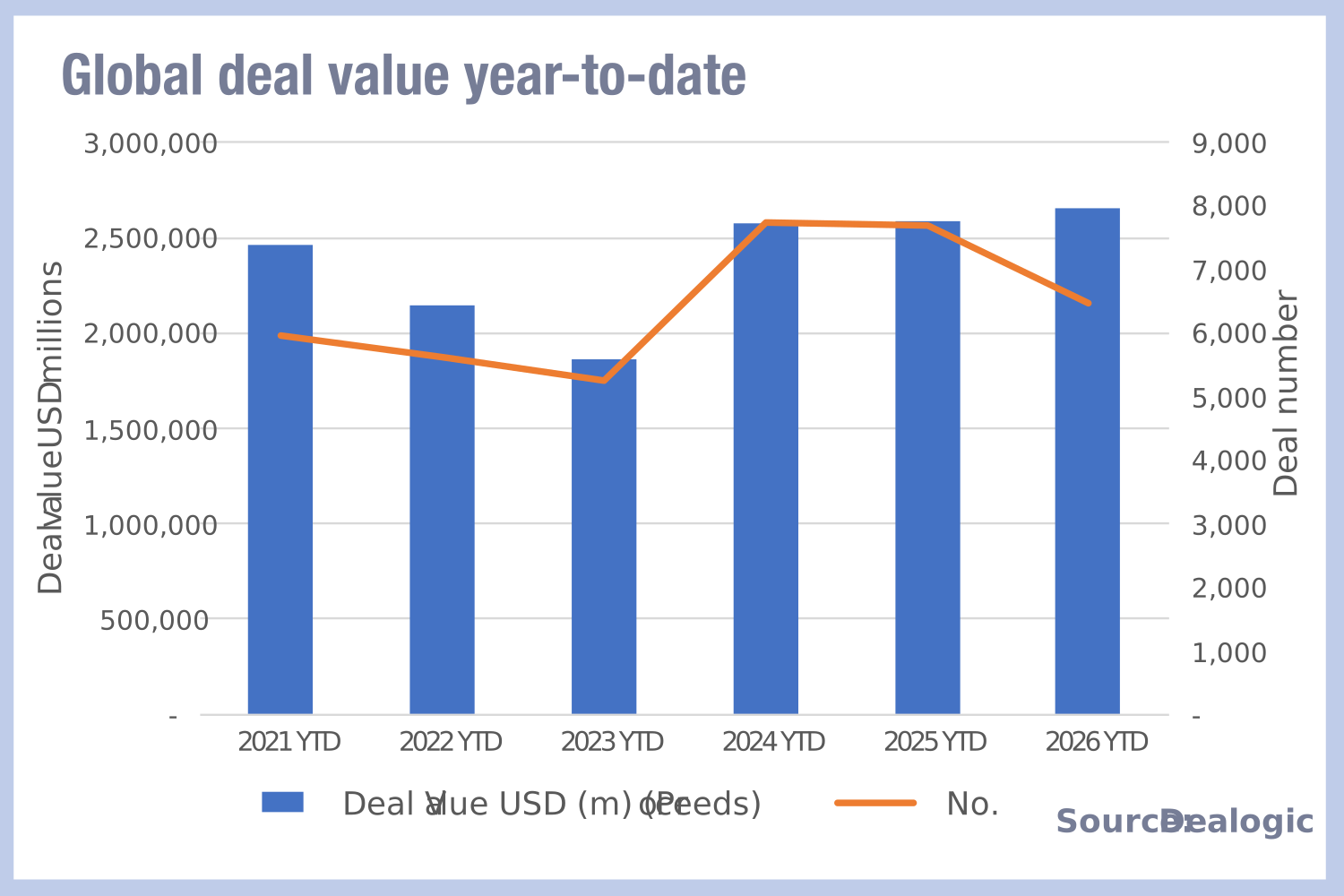
Owen notes that US corporate bond issuance volumes have remained “robust” with US$577 billion of US investment grade supply year to date which is up 25% the same period in 2025.
“For us, the ability of the bond market to clear $65bn in a single session during extreme market volatility is a powerful demonstration that yield-driven demand is the dominant force in fixed income right now,” he writes. “Markets will remain volatile as investors react to developments in the Middle East, yet technicals are exceptionally strong and structural demand is resilient. For now, the market looks to be pricing in a resolution sooner rather than later, and fund flows would appear to concur with that. However, should that narrative change, we could see more pressure in risk assets.”
©Markets Media Europe 2026