



The Bloomberg / Eurex credit futures conference in mid-January 2026 had all seats taken and attendees standing in the aisles. That bursting enthusiasm was mirrored in the markets with average daily volume and open interest in the product growing more than two folds in the past year. More surprising is the evolution of the liquidity traded and held on the main venues, CME, Cboe, and Eurex. While lit trading has grown on the first two, trading is migrating to almost exclusively block and request for quote (RFQ) trading on Eurex.
In January 2026, CME’s US dollar credit futures traded US$573 million in average daily volume (ADV) with US$498 million in open interest (OI), up 296% and 316% year-on-year (YoY), respectively.
Cboe’s iBoxx iShares suite printed US$198 million ADV and US$2.03 billion OI, up 90% and 197% from January 2025.
Eurex’s euro contracts saw €105 million ADV (down 38% YoY) on €2.93 billion of open positions (up 59% YoY).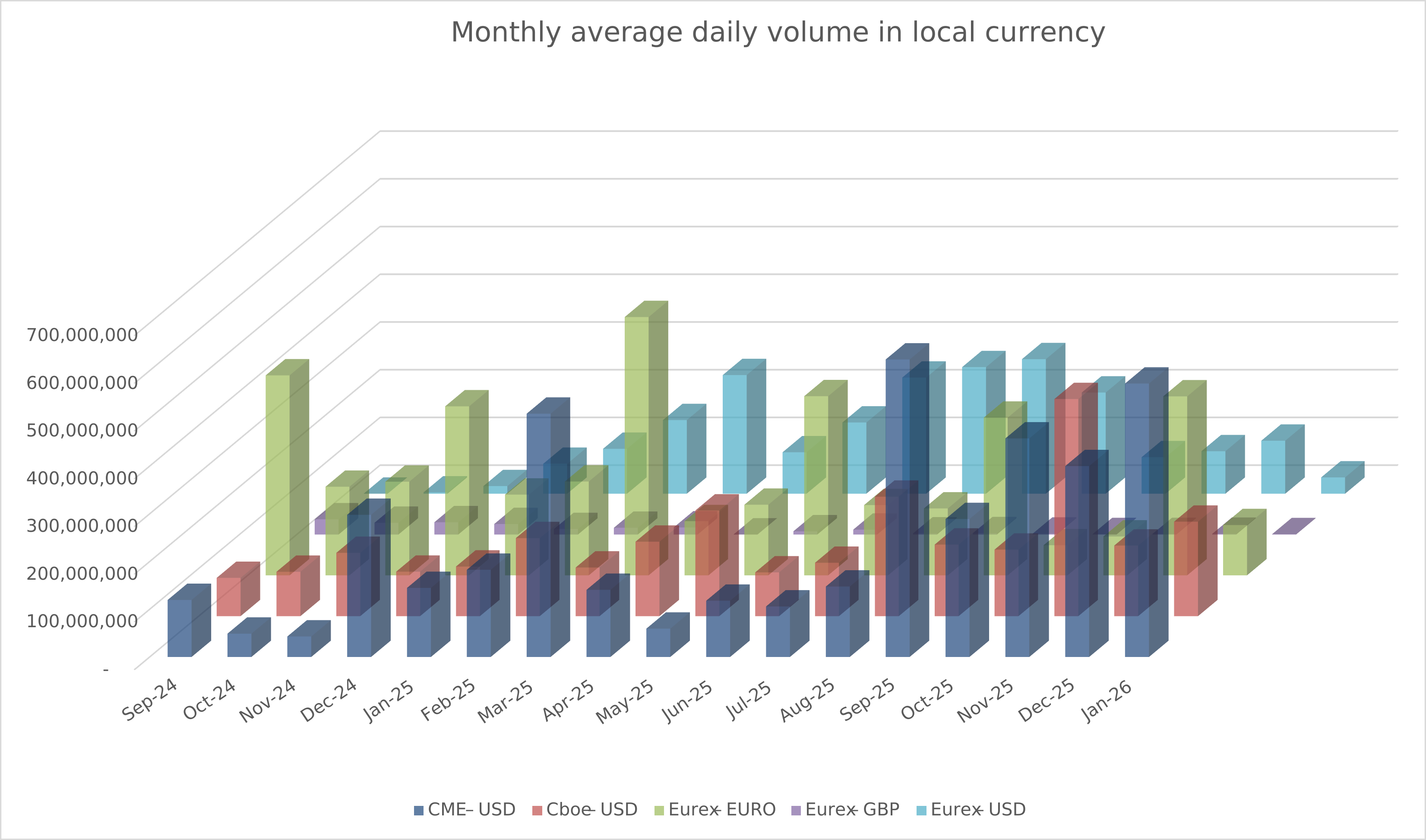
CME lit volumes are up more than threefold year on year
CME began 2026 with a sharp step-up in trading activity versus January 2025. The first month of the year saw ADV across the CME dollar credit futures complex rise to US$573 million, up from US$145 million in January 2025, a near fourfold increase, and higher than the US$400 million traded on average in December. Open interest averaged US$498 million, up from US$120 million a year earlier, though down modestly from December’s US$541 million.
Taking the DHB future, for example, the investment grade duration-hedged Bloomberg index-based future, we find that resting liquidity in January 2026 versus 2025 within CME’s first 10 bids or offers has increased from US$24.6 million to US$32.7 million, and on the offer side from US$24.5 million to US$33.2 million.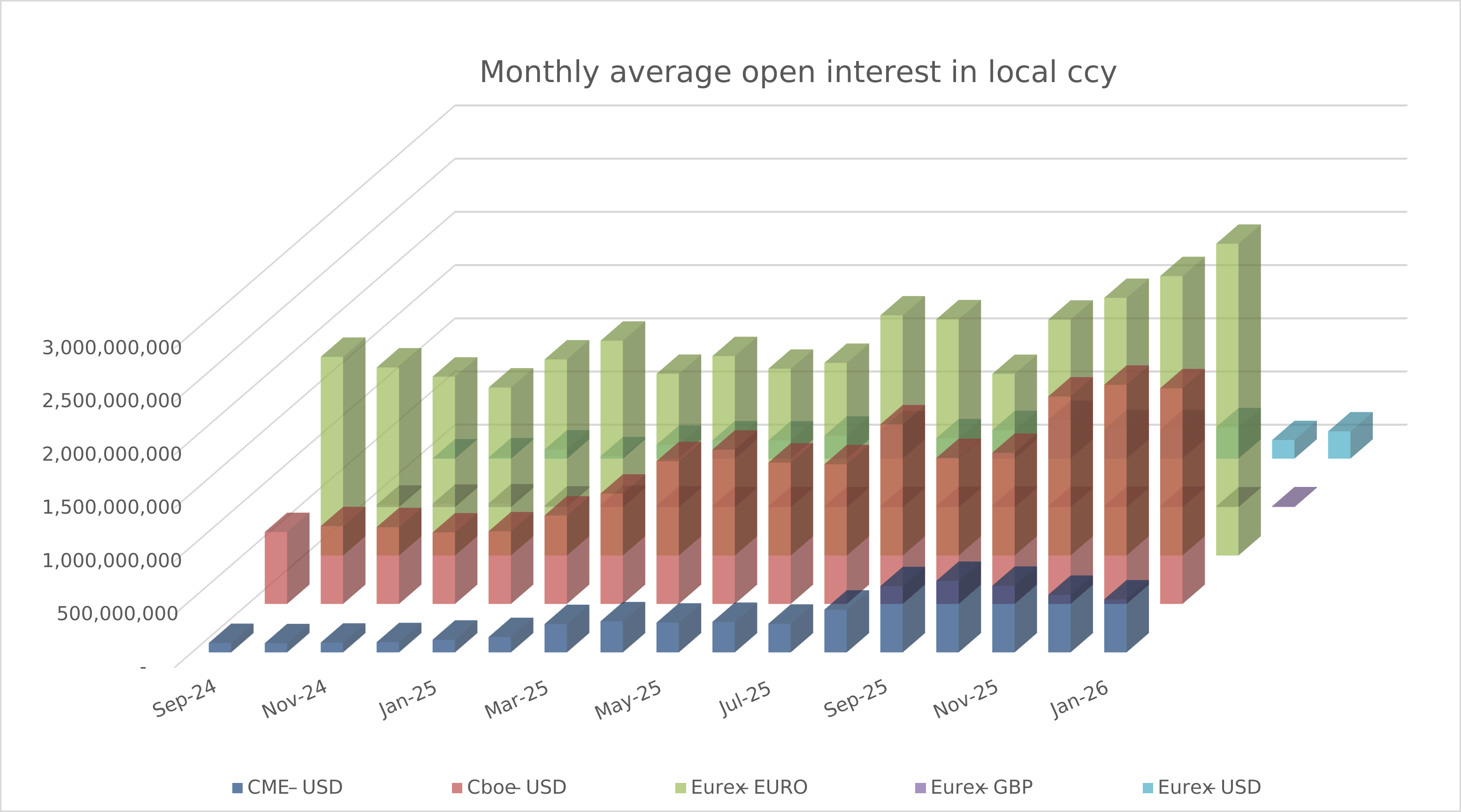
Eurex trading slows and migrates to block trading while open interest keeps ramping up
In euros, Eurex’s Bloomberg MSCI-based credit futures extended their growth in positioning, but turnover cooled sharply from year-end levels. January ADV fell to €105 million from €169 million in January 2025 and from December’s €375 million, while average open interest rose to €2.93 billion, up from €1.84 billion a year earlier and above December’s €2.63 billion.
Eurex’s sterling-denominated contracts remained marginal and continued to contract year-on-year. January ADV was £0.8 million, down from £11.6 million in January 2025, while average OI fell to £7.2 million from £19.4 million.
Eurex’s US dollar credit futures showed a similar split between open interest and flow. January ADV dropped to US$34 million from US$94 million a year earlier, but average open interest increased to US$256 million from US$130 million.
Looking into these surprisingly lower trading volumes, we find that most of the trading seems to have migrated to RFQs and block trades.
We present below trading turnover for FECX, the investment grade euro Eurex product. The top chart represents trading with mean bid-ask. The bubbles have for centre the 30 minutes vwap, their sizes represent the notional traded. The colours of the bubbles represent the protocol used for the trades. Lit trading is green, red trading represents blocks and RFQs, and grey is when the two types happen within the 30-minute collation window.
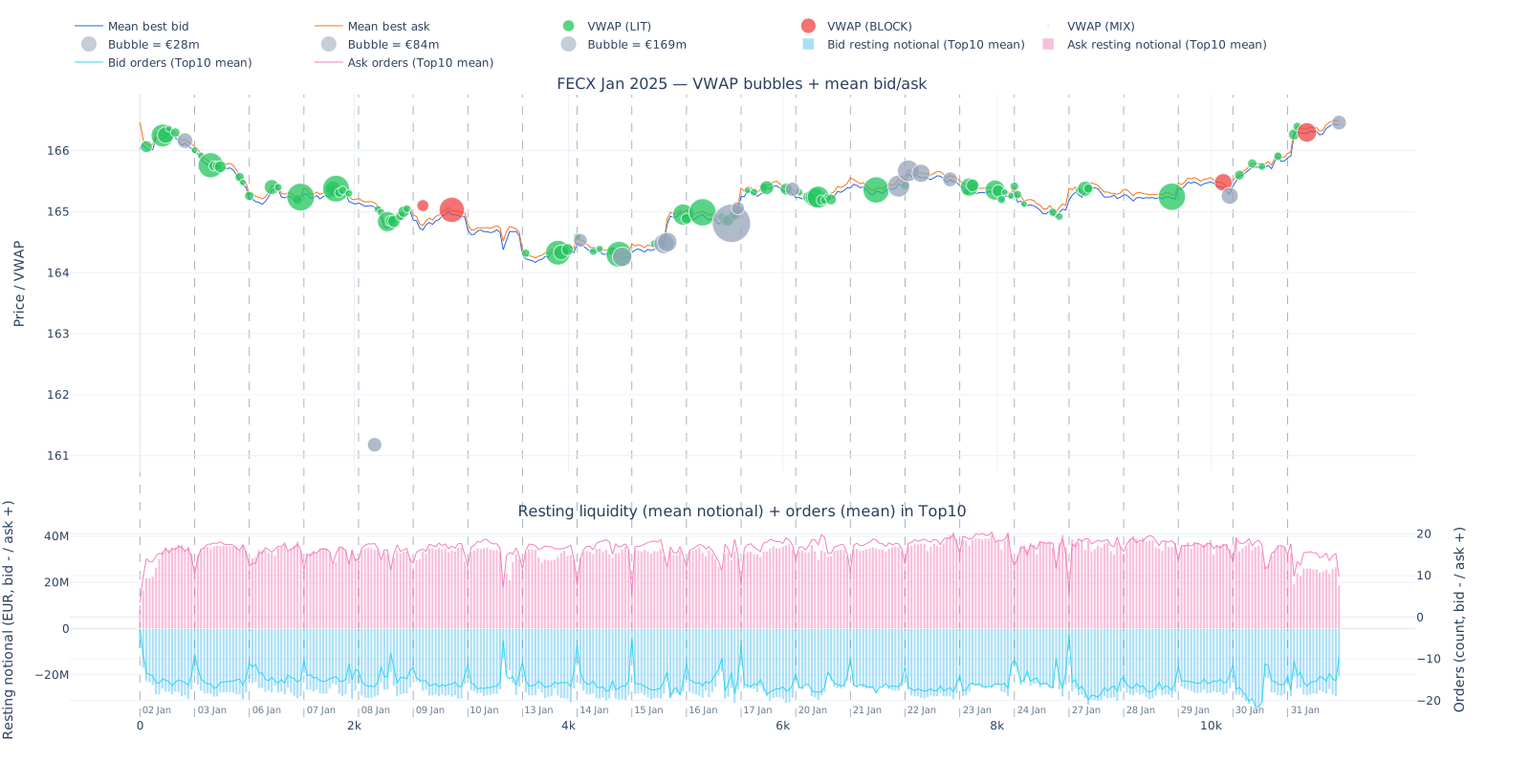
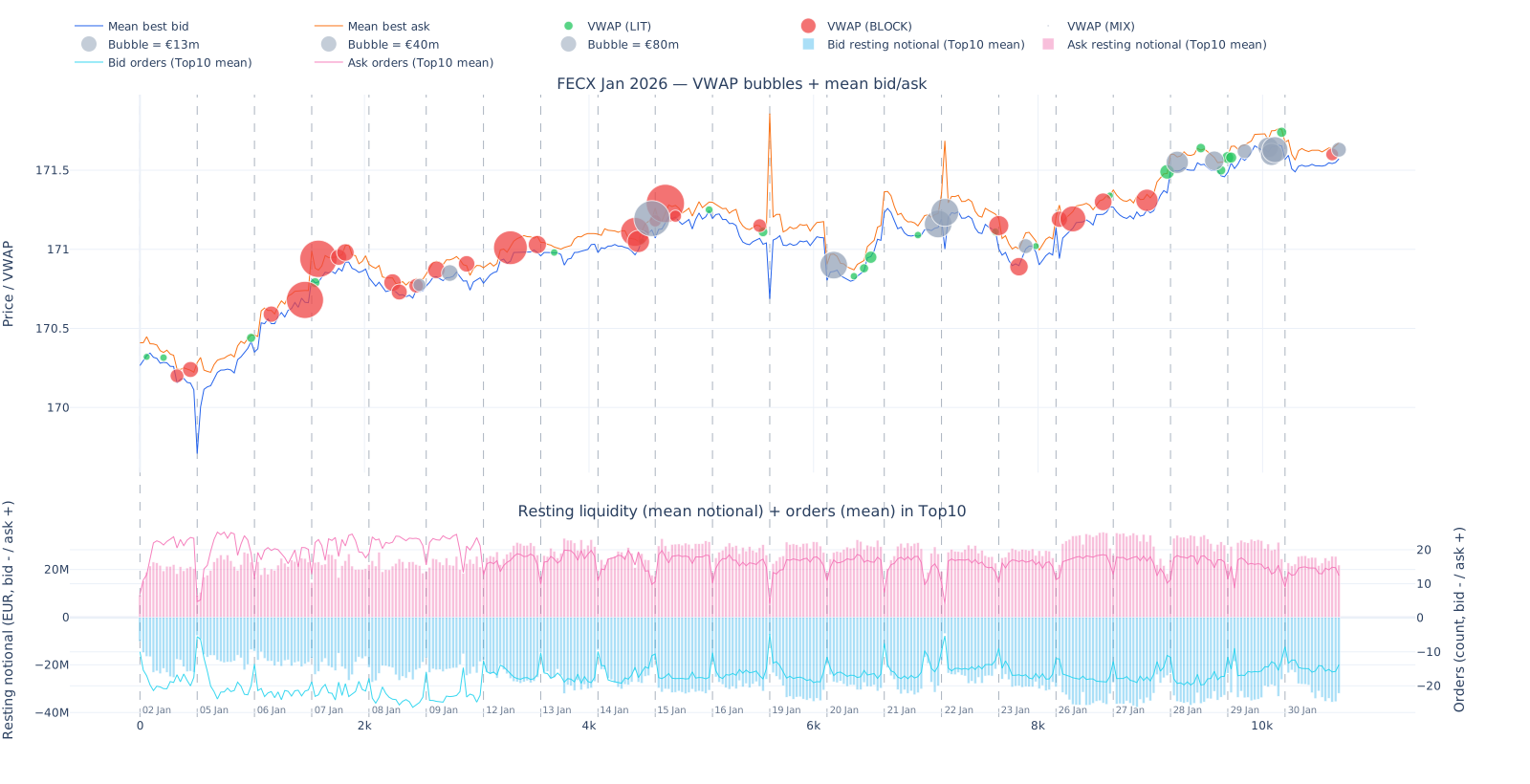
Most of the January 2026 volume is now in red because it is traded as blocks. Resting liquidity in the first 10 bids or offers in the book is also down from 2025.
Eurex did not give us a reason for the change, but market participants told us it probably reflected the economics offered to market makers for interacting on the lit order book.
Cboe’s volumes increase against underlying ETFs
Cboe continued to see its credit future product grow both in open interest and average daily volume. January ADV was US$198 million, up from US$104 million in January 2025 and higher than December’s US$148 million, though far below November’s record spike. Average open interest held above US$2.0 billion at US$2.03 billion, almost triple January 2025’s US$682 million and on par with December 2025.
While we currently do not have similar granular data for CME and Eurex, one market participant points to a single trade on the high yield future on 26 January: US$400 million was traded in the book, and that represented more than 26% of the ETF volume during the session.
As credit futures expand, synthetic liquidity is being added to the complex, and many sources have now told The Desk that the cumbersome back office, middle office, risk, and regulatory reviews to onboard credit futures have now been achieved at most large institutions. That should result in further growth in volume and open interest to match the visible interest for the product at conferences and anecdotally.
©Markets Media Europe 2026