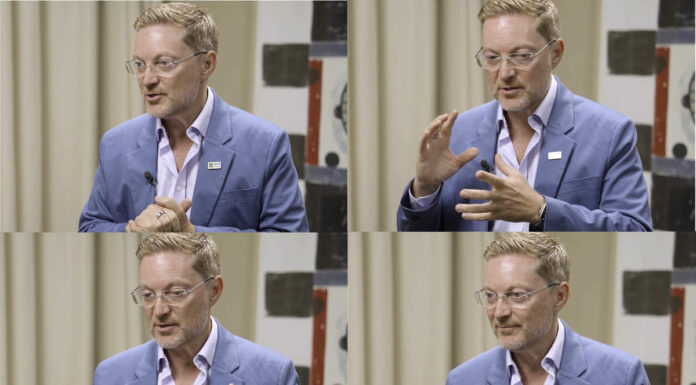




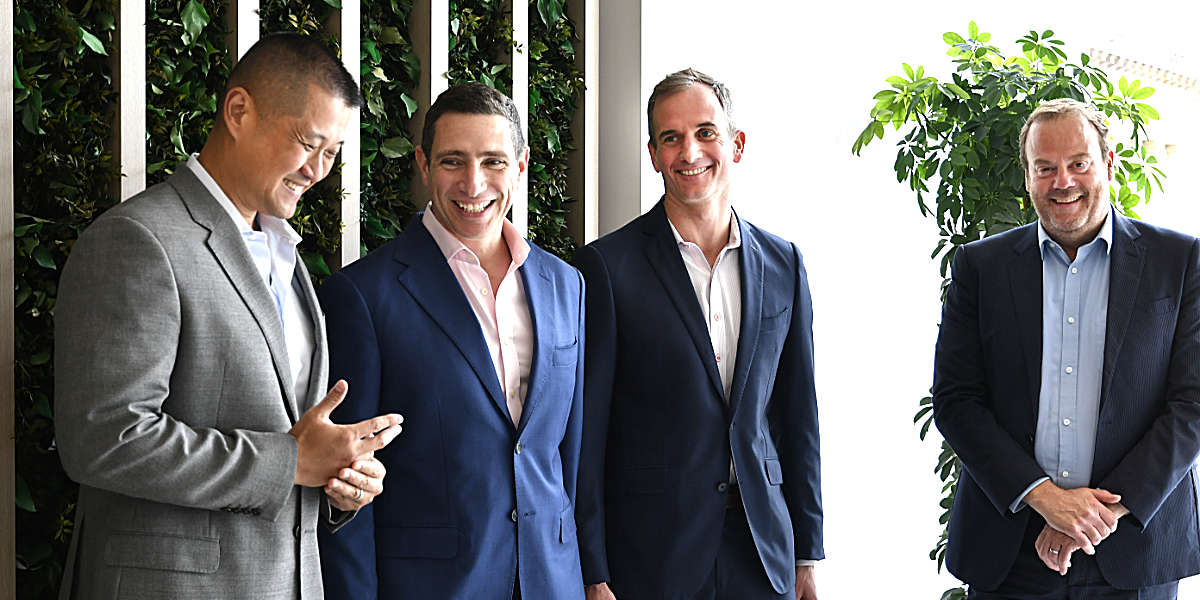
Running one of the leanest teams on the street, Ray Uy’s traders amplify their firm’s investment ideas by combining deep relationships, cutting edge technologies and centuries-old wisdom.
Investment management is a perpetual race, requiring stamina, smarts and efficiency. The DESK spoke with Ray Uy, global head of FICC trading at Invesco; Bruce Leete, head of Americas macro trading; Dan Dewar, head dealer for Henley fixed income; and Karim Awenat, head of EMEA macro trading, about their team, their approach to changeable, volatile markets, and the philosophy that guides them as they deliver best execution for the US$2.5 trillion asset manager’s fixed income funds.
Dan Barnes: How are Invesco’s fixed income trading operations set up across geographies and instrument classes?
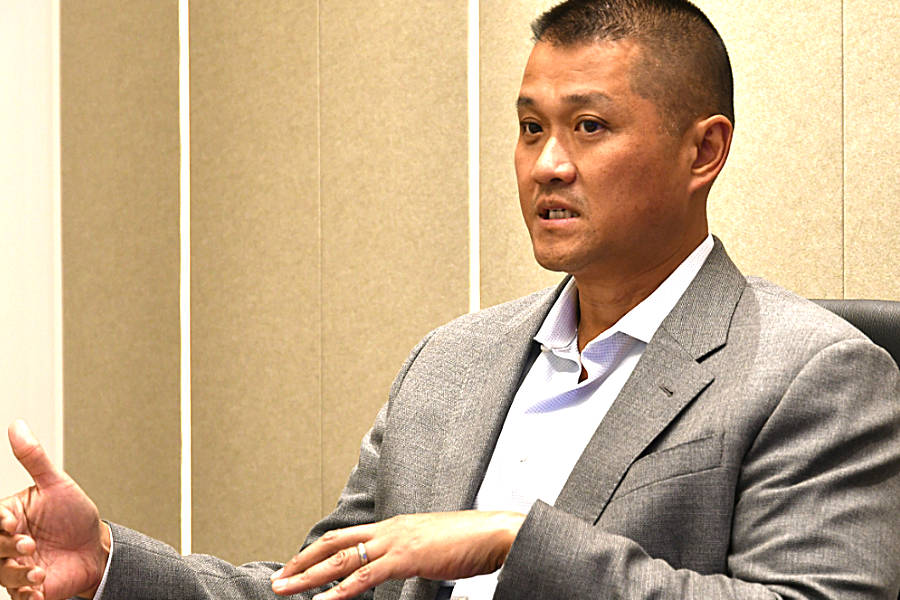
Ray Uy: Our team covers everything non-equity — fixed income, currencies and commodities, with a slight smattering of equity derivatives. It’s a global platform. We follow the sun, trade locally where appropriate, and have locations in North America, the UK, and Hong Kong. We run a model where we can adhere to and establish global standards, but allow for local management of those standards to account for any nuances that occur within any geography.
In general, we have a head of macro and a head of credit. In the UK we’re set up a little differently, because we have two franchises: Dan sits in Henley, which is the predominant AUM for our active fixed income strategies, and Karim sits in London, covering the broader set of investors including our exchange traded funds (ETFs). Their backgrounds lend themselves to the same structure — Dan is heavily involved with credit, and Karim’s focus tends to be more macro. Asia is the only exception, because it’s a smaller office, so the person leading the team there handles everything.
Dan Barnes: How do you structure the use of derivatives within the fixed income area rather than having a separate team?
Ray Uy: Derivatives are just an extension of market expertise, so we don’t take pains to distinguish it as a specialisation. If you’re a senior trader within any market segment, the expectation is you have the ability to transact there.
Dan Barnes: As a firm with significant passive investment capacity — where trading must take place at defined points — how do the trading teams avoid being picked off by the market?
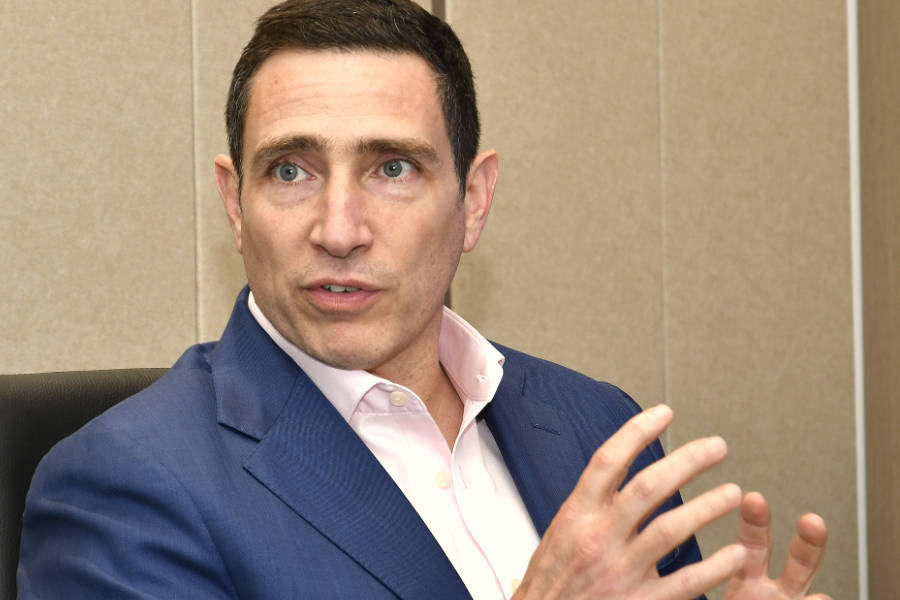
Karim Awenat: The way passive funds have developed is that orders have now become fairly small across a huge number of line items, so the ability to be picked off is negated by the fact that you can’t pick me off on one line item — you’d have to pick me off on the whole marketplace. As large as our ETFs are, they’re not going to dwarf the full gilt market at 4:15 pm. That does allow us some flexibility, and it’s come from the development of portfolio trading systems into algo trading and algo quoting, which means the liquidity is there, as is the ability for dealers to respond to 400 quotes across multiple inquiries simultaneously. That electronification and automation makes it a very slick operation, and we monitor our outcomes very closely to make sure we’re not getting unreasonable slippage around those times.
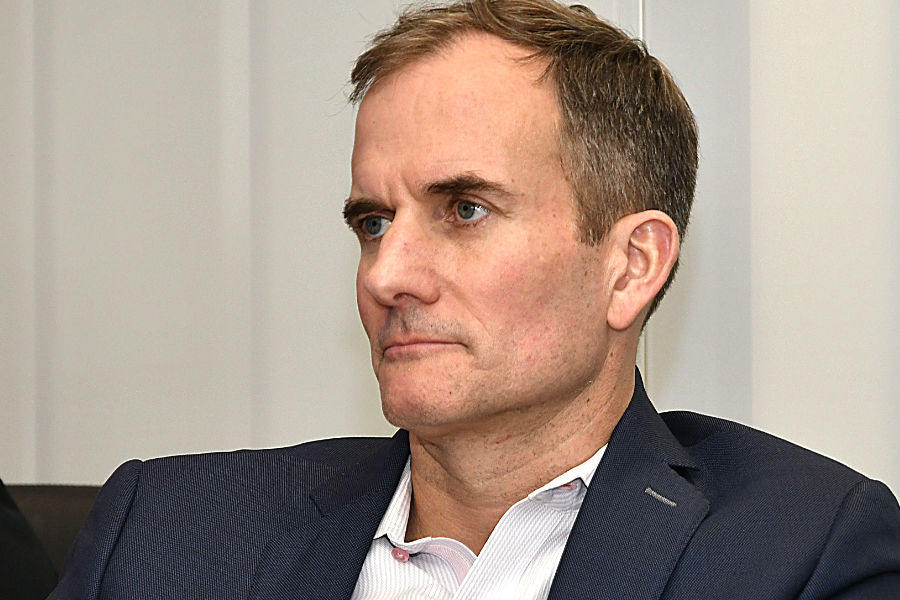
Bruce Leete: The only thing I would add is around the relationships that we develop with our counterparts across the street. We rely on them heavily, but in the right context. That can also help with closing-time trades, but we’re always careful about it.
Dan Barnes: Which measures of execution quality do you use, and how do you apply particular models to particular funds or trading approaches?
Ray Uy: Measuring the impact of execution is really more about defining a process versus statistics, because you can generate whatever statistics you want to tell whatever narrative you want to, for whoever you’re reporting to. For us, legitimately, it’s more of a holistic process, because there are lots of facts and circumstances around any execution scenario — market conditions as well as investment intent — that often collide in unexpected ways. Part of the value of having seasoned professionals in the seat is their ability to respond and adapt to those conditions in real time. That said, there is value in tying down some of your activities to a number, so we deploy an external transaction cost analysis (TCA) vendor — BestX — and separately we have our own internal analytics to evaluate those numbers and incorporate other factors beyond our control, to ensure we have a comprehensive picture of any outliers. That gives us the appropriate context to talk through TCA results with clients.
Dan Barnes: How do you see automation supporting best execution today, both within internal workflows and within the market more broadly?
Dan Dewar: We do a decent amount on auto-execution using Tradeweb and MarketAxess, and clearly to do that we set our own parameters, which gives us a high level of comfort that we’re transacting with good outcomes for clients.
Karim Awenat: In terms of ticket counts, we’re up at about 90+% for gilts, and for volume it’s more like 75%. Gilts are pretty easy to trade at the moment; we’re in a better liquidity period. But this also touches on the TCA metrics point. Our TCA metrics may tell me that my 4:15pm trades are being executed very well with a particular counterparty, but they might not have the distribution or the balance sheet to take a large order. That’s when you need to work on relationships and identify who the best executing counterparty is for those larger trades.
Dan Dewar: For higher-touch credit, we work very closely with our fund managers — We sit amongst them and it’s a constant conversation. Things that might stay on our blotter for a while do generally come back to a high-touch approach: knowing where to go, building relationships, and having pre-trade discussions with fund managers. It’s rare for us to get a trading list without context, because we’re so embedded in the process. We try to help them frame their portfolio in a way that we can facilitate, rather than something we can’t.
Dan Barnes: Is there information you can feed to portfolio managers that allows them to send smarter orders?
Dan Dewar: We do this constantly, and I think we’d like to get smarter. This is where AI will ultimately be very helpful. We’re getting a lot of data, but finding a good way of consolidating that into a really good metric is something we would love to pursue. At the moment, we’re scraping information from different places and passing it over — providing axes, providing ideas, having discussions. Especially on the high yield side, it’s still an illiquid market in Europe, so you have to take a different approach than you would in investment grade. That’s where we can make a difference from a credit perspective.
Dan Barnes: How would you characterise the value of the trading function?
Ray Uy: If you think about how we view trading writ large as a function, I would summarise it as: our purpose is to amplify the impact of our portfolio managers’ investment decisions — that’s it. Whether the portfolio manager is a fundamental active fixed income PM or a passive ETF PM, having a centralised platform with a skill set diverse enough to meet either of those needs and complement their decisions — that is, in essence, our purpose. Within certain markets there is no getting away from high touch — it is the market’s nature. For passive strategies, it’s about execution efficiency, scale and speed, leveraging technology to enable traders to have that impact. For active strategies, the value is less in the execution itself and everything that comes before and after. An active trader’s value is as a conduit to the markets for the PM — gathering intelligence, summarising events as they unfold, and providing input in a way that’s meaningful to the PM’s investment process. I expect everyone on my team who is involved in an active strategy to be an input provider into that process, and I think our PMs recognise and rely on that.
Dan Barnes: Is the UK and European consolidated tape making a material difference to trading, and is transparency becoming more accessible?
Dan Dewar: There’s a lot of talk about this, but I haven’t noticed a massive shift yet. Most peers I’ve spoken to have been waiting until the tape actually comes out to see what impact it has. The deferrals are a separate question — there’s a lot of talk about people processing things in different ways and reporting differently at different venues. To me, it hasn’t had a meaningful impact yet. We’ll probably take a wait-and-see approach on how we consume it going forward. Venues like MarketAxess already have a premium product that is probably more transparent than the tape in any case, and the UK tape is deliberately designed to be relatively friendly on deferrals. I think we’re all in agreement that these transparency initiatives are good. TRACE in the US has been good. As long as the deferrals are sensible and we can all be comfortable transacting in block size, then we’re all for it*.
Karim Awenat: There’s an interesting parallel with SDR reporting on derivatives — particularly credit and interest rate derivatives. There was a lot of concern about clearing non-MAT trades because it would flash up on SDR and highlight your activity. The concern was whether you could trust the deferral to protect both the ongoing transaction and the dissemination of risk. That was something a lot of people were worried about at the start, but we’re now in a situation where I haven’t heard anyone really complaining about SDR for a couple of years.
Ray Uy: Thirty years ago, information advantage was a very real edge. Given how technology and the nature of participants have evolved, information is still absolutely critical to alpha, but the way people consume it now is more about your ability to connect the dots and tie things together. There’s a little less sensitivity to showing people your position, because you’re more confident they won’t be able to tease out your thesis just from knowing you did a big trade — in a way that probably wasn’t the case 30 years ago.
Dan Barnes: What is the management structure across the trading function, and how collegiate is the decision-making process?
Bruce Leete: You can tell by the way we operate in this room. Ray sets high standards, but he also gives us a lot of discretion in terms of what we do and how we operate. Speaking for myself — but I think I speak for everyone here — we all have a lot of faith in Ray and the trust he places in us. We don’t really spend too much time concerning ourselves with how he will view a decision we make. We spend a lot more time deciding what the right decision is.
Karim Awenat: Ray understands the product innately, which is really valuable. We can say ‘this is a problem because of X and Y’ and he gets it. So, when we need to highlight something, or get it raised up the chain, Ray will understand how significant the risk is — whether it’s a risk to the business, a headache we just have to manage, or something that’s a genuine issue.
Dan Barnes: What is your approach to managing and quantifying broker performance, and how do you optimise it?
Ray Uy: We collect a lot of statistics on our transactional activity — looking at it through simple notional aggregation of volumes, as well as imputing what we think the value of those transactions are in actual revenue terms, attributed across all our teams. That enables us to assess whether we’re aligning our activities appropriately with the capabilities advertised by these firms, and whether they’re in alignment with our clients’ needs. We’re continuously working on improving our analytics to ensure that’s optimised. We have a separate group that handles formal counterparty engagements at the enterprise level, but within our team each person is responsible for managing their relationships — because at the end of the day, what matters is whether the two people on either end of the phone trust each other, understand what needs to be done, and can be relied upon.
Bruce Leete: There’s a continuous dialogue between each of us and our counterparts on the street. We don’t let any issues fester too long before flushing them out, and equally, when things are going well, we make sure people know that too.
Karim Awenat: You also have to look not just at the counterparty relationship, but at the counterparty and asset class relationship. ‘Bank ABC’ may be fantastic in emerging markets and have a terrible rates team — and that’s a completely separate relationship. Just because someone is weak in rates, we can’t hold a grudge and not do business in EM. Unless there’s a fundamental structural problem — a credit rating issue, or something around compliance — it’s really about each specific relationship, feeding that information up to the overall group for their formal reviews.
Dan Barnes: How do you represent the trading function internally and externally — in committees, meetings and industry events?
Ray Uy: Externally it’s fairly diffuse. I generally avoid external engagements unless they add genuine value. For the ones we feel are worthwhile, the expectation is for everyone on my team who’s a leader to get involved, establish their brand and position themselves as an expert in the industry — because all those benefits accrue back to the team. Internally, the governance meetings are all distributed regionally: EMEA is handled by Karim and Dan, North American governance by Bruce, Tom, or myself, and anything global I handle. It’s not very complicated.
Dan Barnes: What school of philosophy or leadership ethos most influences how you build and run the team?
Ray Uy: Samurai culture is 100% the thing that influences me most. Within that, there are seven virtues, but the one I focus on is Kaizen, which means the spirit of embracing continuous improvement. Given how things are changing, that’s essential for success. You can speak to certain traders who feel threatened by new innovation or technology. I want my team to embrace it and say: we can adapt and use this to our advantage. The culture I’m trying to build starts with everyone’s circle of competence — each person on this team has very specific and proficient expertise in the markets they lead. But we all know competent people who are complete failures. So how do you supplement that? Within that circle, you inflate it with accountability, integrity, and respect — like inflating it with air to keep it firm. Do that, and you’re in a position to communicate openly and honestly, and to build genuine trust with each person. That trust doesn’t just materialise — it’s a consequence of the other things you promote. It’s at the end, not at the beginning.
Bruce Leete: A good example of adopting new technology with that philosophy was the Chicago team leading the charge on portfolio trading years ago. There was no hesitation from their side to share what they were learning — not only with our team, but with the whole business. They got management buy-in, they got portfolio manager buy-in, and they really led the charge on implementing that process, which the rest of the group has since adopted and mastered.
Dan Barnes: On that point, Invesco was an early adopter of portfolio trading as a specialism — what drove that decision?
Ray Uy: Portfolio trading in and of itself has existed as a mechanism in equities forever. But as a fixed income manager — whether passive or active — the key challenges are managing risk with large cash flows, whether that’s an inflow or an outflow. Very early on, portfolio trading solved two things: shrinking the window of market exposure when you’re trying to get invested or divested, and doing that in a way that preserves the integrity of the portfolio’s risk profile, both before and after. Some other places saw it as a fad — just taking an equity mechanism and trying to convert it to fixed income. Some of the sell side saw it that way too, because all the P&L gets consolidated with portfolio trading, and non-traditional tech towards firms, who dominate in PT, are oriented exactly that way. The reality for us was that it was less about being a unique specialisation of a trading mechanism, and more about recognising this is a new technique that solves an obvious problem — so we need to embrace it and figure out how to wield it to our advantage.
Dan Barnes: Are there other techniques where you think trader specialisation would be valuable going forward?
Ray Uy: Specialisation is really more about expertise and skill set, and it’s up to each individual to decide which area of the markets they’re going to focus on. In an active setting, presenting yourself as a generalist makes it very hard to add as much value. It’s like medicine — you’re not going to get heart surgery from a foot doctor. That’s really how we think about specialisation: within the market context, and in alignment with our clients’ needs. The one thing we are noticing as we hire more junior talent is that analytical literacy and tech proficiency are increasingly important, as is the ability to adapt to new technologies as they emerge. But all the value is extracted in the application of that innovation — without the right market skill set, you can’t do that. You can have the greatest large language model (LLM) or AI agent in the world, but if you haven’t had the experience and relevant market skill set to train it appropriately, it’s inert. We’re fully cognisant that this is early. We don’t know all the answers, and we don’t know where it will end up — but we need to survive the journey. Don’t do anything that prevents you from surviving the journey.
Karim Awenat: Tech literacy is important, but the absolute key thing is not necessarily Python skills. What you need is someone who’s not afraid to try new technology, to try to break it, have a fiddle around to see what it is capable of. And back to Ray’s point — it’s not necessarily just market literacy, but a genuine interest in markets. When you’re looking at juniors, it’s very easy to spot someone who couldn’t care about the marketplace. Ultimately, regardless of the bells and whistles and the tech — this is what you’re doing. You’re trading in the financial markets. If that’s not interesting to you, it’s not for you.
Dan Dewar: That passion for markets has to be there — it’s the most important thing. You can shape everything else into what you want from a person, and guide them. We all still find it fascinating: how events happen in the world and what impact they have. We live and breathe that. We enjoy it and always will. That’s what you look for.
Dan Barnes: Has the increasing role of engineering processes and workflows changed the nature of trading as a profession?
Ray Uy: I don’t think engineering supplants the relationship side — I view all the changes in processes and new innovations as complementing what exists, not superseding it. When you have a trade issue, is it easier to solve it by chat, or by just picking up the phone and getting to the crux of the matter? The phone call is ten times more efficient — and that’s never going away.
Bruce Leete: What automation really does is make all those small trades efficient and fast, which allows you to focus on the other pieces of the puzzle — the interpersonal interaction with the portfolio manager team to figure out how to implement a trade, or negotiating with counterparts on pricing and performance. Much like the need to adapt to new technology, the need to nurture interpersonal connection remains just as real.
Dan Dewar: There are whole swathes of the market that will never go on electronic platforms, and that’s never going to change. Fixed income is a fundamentally different market to equities — so many different instruments, so many intricacies, with bonds individually designed to fit how companies want to borrow and bonds are deliberately designed to fit what companies want to borrow. Around 50% of US credit is still traded off-platform. That’s not going anywhere.
Dan Barnes: What opportunities do you think AI creates for traders?
Karim Awenat: Augmented AI is the way to go — it’s a partnership between the human and the AI. In a trading function, we are so far away from agentic AI trading. The asymmetry of win versus loss is so skewed against you that it’s not viable to divest your trading ability to an agent. The other analogy I’d use is: AI is like a sat nav. As soon as you start using it, you lose the ability to navigate your local area. You don’t know the back roads. If everyone’s AI is telling them the same thing about what’s happening in the market, that’s not an edge — it’s a herd. It’s a partnership, and when you’re training juniors in a new asset class, they need to understand the nuts and bolts, and most importantly, they need to know when something smells off. That comes from experience and understanding what goes on.
Ray Uy: There’s a massive difference between what people think is compute versus calculate. People often say AI is the answer to something, but the problem actually requires an automation solution — which is very different from an agentic solution, which is best for non-deterministic tasks. The agent is your caddy, not the golfer. The minute you put the caddy in the golfer’s seat, that’s where you run into problems. It’s there to make you better — it’s an adjunct, not the lead. The ‘A’ in AI is best represented by either ‘augmented’ or ‘alien’, because I don’t think anyone could ever fully tease out the intuition behind machine learning.
Dan Barnes: How are dealer relationships changing as providers of liquidity and research?
Karim Awenat: There’s no hesitation for some liquidity providers to say they’re not a relationship bank — they’re there to provide good prices and do trades that suit them. You don’t want to be in a situation where you’ve neglected all your other relationships just to trade with these providers, and then find those trades no longer suit them — suddenly you’re not the first call when you go back to your old friends who you haven’t been there for.
Ray Uy: There’s a limit to the value of ruthlessly optimising the liquidity you provide to clients. The quant-based liquidity providers of the world — that is the only dimension where they offer value, which is fine, but if you lean too heavily into that within fixed income, one of the most valuable resources is new issue, and your secondary activities with the banks that are running those primary issues is important. You need a complementary arrangement to improve your ability to secure primary securities — the principal trading firms don’t provide that, at least not yet. On the research side, most asset managers are far less reliant on sell-side research than they once were, because we can generate a lot of those views organically. There’s still a role for it, but it’s more supplementary than primary.
Dan Dewar: We have a lot of internal resource now. Our analysts read the street research and formulate their own opinion, using it as one input. There’s an internal system where we can go in and see what the analyst thinks of any company. If there’s primary activity, they report on it straight away, and they sit very close to the trading desk — or if they’re in the US, they’re very accessible. There’s great connectivity to get quick answers.
Dan Barnes: What are the greatest market challenges affecting day-to-day trading across fixed income right now?
Bruce Leete: We’ve been in incredibly volatile markets recently. The need to stay on top of what’s happening, how markets are developing, and communicating that internally has intensified. In some ways it’s been a blessing — there’s a lot more to talk about and discuss with colleagues. In some ways it’s challenging. Markets are moving faster. I wouldn’t say liquidity has dried up significantly — that hasn’t been a major challenge — but just in terms of staying on top of daily flows and a dynamic world order, it’s trading by tweet. There’s a lot more ‘jump’ risk in essentially any asset class, whether in the midst of execution or in the pricing of an option.
Dan Dewar: We saw it in the UK earlier this year — a lot of hedge funds were long the front end, and then after that price action, [we saw] a huge sell-off. You just don’t have a feel for how long they were or how they’re getting out of a trade. That only happens when you get a left-field situation.
Ray Uy: Circling back to the information theme — because of technology and market structure change, the way people build positions is now so diffuse. It isn’t like calling your best relationship and putting the whole trade on at once. People are building positions that you don’t really know about, and retail investors can cluster like armies of ants and become far more impactful than was ever the case before. Add to that the behavioural dynamics — tweeting as a market mechanism didn’t exist before, and that mechanism for shocking the market is brand new. The recoveries are much quicker now, but the reaction function is higher velocity and less predictable. That affects everyone who operates in these markets.
Dan Barnes: In sustained periods of volatility and unpredictable markets, how do trading desks manage the challenge of having to trade when conditions are extremely difficult?
Ray Uy: That is the job of a trader — to understand whether liquidity is being priced fairly given the underlying conditions. That’s why it’s critical that everyone on my team who’s a leader has a clearly defined market expertise, because it shows up in those prolonged periods of volatility when the screens are blank. You have to engage in hand-to-hand combat for price discovery, and you need to be able to take very sparse inputs, reach a useful conclusion and act in the heat of the moment.
Karim Awenat: You can’t run a model when there’s no information.
Ray Uy: Exactly. Models rely on data, and in the most critical moments, data is absent.
Dan Barnes: How could market structure be better optimised to support buy-side trading desks?
Dan Dewar: One area I’d love to see progress on is primary markets. I’d love to see some kind of electronic solution there. The manual process of managing primary market allocations and messaging is just painful, and there’s no upside in it for us. We’re getting a number and putting a number in — that’s where our added value is not. If AI can help manage that messaging back and forth, reducing errors and time wasted, we’ll all look back in ten years and wonder why we did it the way we did.
Dan Barnes: How does the trading team’s size and efficiency compare to peers, and has market volatility required meaningful changes in resourcing?
Ray Uy: We are extraordinarily efficient as a fixed income platform relative to our peers. Our team trades for public and private investment teams across equities and fixed income, all the major asset classes, active and passive — and we have 26 people across the globe. Relative to our peers with comparable AUM, the headcount for our FICC team is substantially lower. That speaks to how well everyone on this desk has adapted and leveraged their resources. Over time, when someone has left, they haven’t always been replaced one for one — we’ve just had to navigate that and we’ve been pretty resourceful. I’m proud of that, and I think it genuinely sets us apart.
Dan Barnes: How much does the trading team contribute to alpha generation, as opposed to simply managing costs?
Ray Uy: That’s a hard one for a centralised trading team. I get very little complaint from fund managers — both on the passive and active sides — about our team’s ability to contribute value to their process. I check in with them periodically, and I’d say categorically we’re doing a good job.
Karim Awenat: How do you put a number against convincing a portfolio manager not to put on a bad trade? We speak to all the portfolio managers and find out if they’re happy with what we’re doing, because it’s hard to prove the counterfactual. Measuring each trader’s impact through desk arrival times, for example, is complete nonsense. It creates bad incentives that corrupt the entire process. The irony is that in the era of more and more data and more and more analytics, the right way to measure people is to do it qualitatively.
*NB this interview was conducted before the launch of the UK’s Consolidated Tape.
©Markets Media Europe 2026