




The strength of the US economy is a prevailing macro theme, and while there are concerns about growth being derailed, the near-term outlook remains benign.
The big picture was discussed Wednesday morning in a macro view keynote at Fixed Income Leaders Summit in Boston.
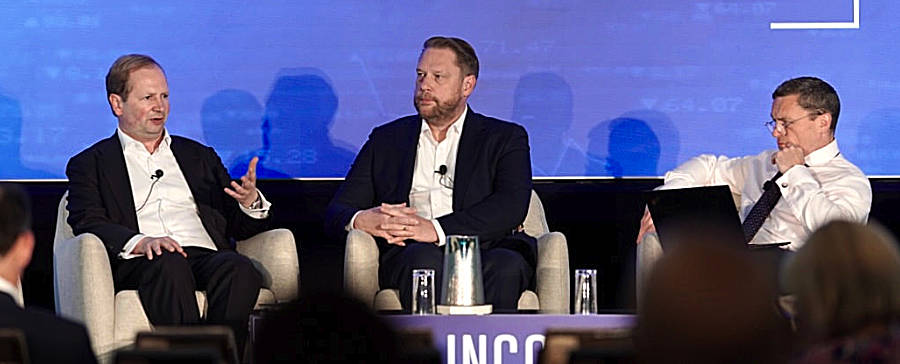
Alex Grassino, Chief Economist and Head of Macro Strategy at Manulife Investment Management, said an apparent peace deal in the Middle East would pave the way for a return to the pre-conflict market playbook, which was characterized by a constructive economic backdrop.
One worry is a labor market that recently has shown signs of tightening, which could push the US Federal Reserve to turn more hawkish on interest rates.
Christian Schulz, Chief Economist at Allianz Global Investors, said a dynamic to watch is “inflation becoming interesting yet again.” Beyond the Iraq conflict boosting oil prices, Schulz noted other “accumulating” factors such as producer prices in China turning significantly positive and el nino potentially pushing up food prices.
“We shouldn’t underestimate the persistence of inflation,” Schulz said.
The FILS panel took place just hours before the first Fed rate decision under new chief Kevin Warsh, and expectations are for a hold. But Grassino cited political pressure on Warsh to lower rates and said there’s an important difference between what the Fed should do and what they will do. Given that “will probably overtakes should,” there may be a rate cut sometime this year.
The economists said credit quality in public markets remains generally good, but there are concerns about private markets that may spill over into public markets. Another concern is about a potential stock market drawdown of 20% or more that would destroy wealth and change the economic outlook.
The economists say their portfolio-manager colleagues are sometimes nervous and exhausted but focused on staying nimble.

The subsequent panel at FILS focused on market structure and stress-testing for resilience to macro shocks and volatility, covering four critical components of fixed income: credit, convexity, carry and conditions. Panelists were Andrew Peters, Head of Investment Consulting Group at New York Life Investments, and Alexandra Gorewicz, Vice President & Director in Active Fixed Income Portfolio Management at TD Asset Management.
The panel noted that convexity as manifested by the yield curve has been volatile, especially at the front end of the curve which is more influenced by expectations of Fed policy.
Credit is more of a “slow burn” story compared with quick changes in the yield curve, and credit risk need to be assessed and re-assessed by sector and security, especially as conditions change, for example with recent disinflation in the software sector. “You have to be ready for the next shock.”
The panel noted that “conditions” is essentially liquidity. A liquidity shortfall is an obvious threat to a portfolio but it can also be turned into an opportunity if an investor has the right strategy and tools.
It was concluded that there are many stressors for investment portfolios and many ways to stress-test, but it’s not easy to do comprehensively and effectively.
©Markets Media Europe 2026