





The latest report by the Association for Financial Markets in Europe (AFME) on European leveraged finance, primary high yield (HY) bond issuance fell sharply in the opening quarter of 2026, with total activity declining significantly from the pace set at the end of last year.
According to the report, “primary high yield bond issuance totalled €21.8bn (on 55 deals) in Q1 2026, a 40.8% decrease from €36.8bn (on 94 deals) in Q4 2025.”
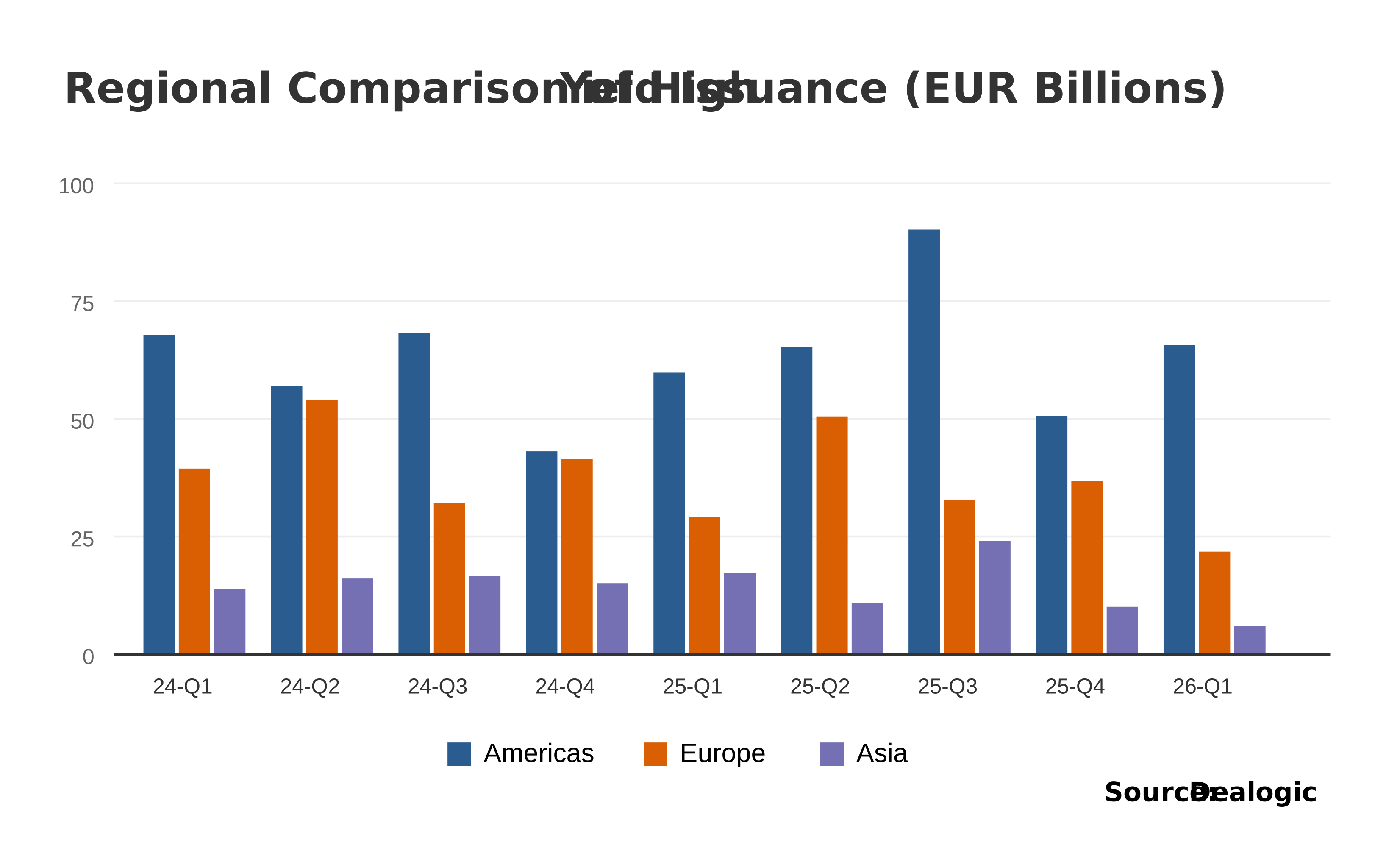
The drop in both volume and deal count underscores a more cautious tone among issuers in the early months of the year. Geographically, the market remained anchored in developed Europe.
“Issuance by firms located in European developed markets represented approximately 69% of the total (€15bn), while firms in European emerging markets represented the remaining 31% (€6.8bn).”
The motivations behind new issuance were consistent with trends seen in recent quarters.
“The primary use of proceeds was refinancing, which accounted for 50% of total issuance, followed by general corporate purposes at 36%,” the report says.
Notably, the appetite for liability management showed no sign of fading: “the share of refinancing-related issuance has remained strong, after reaching the highest value in recent years during Q2 2025,” AFME noted.
One striking feature of the current cycle is the complete absence of distressed activity, with AFME reporting there have been no restructuring-related deals since Q4 2024. That suggests most issuers under pressure have already addressed their capital structures, or have looked at other options such as direct lending to raise finance.
Looking at the broader high yield universe rather than just new issuance, concentration at the sector level is pronounced.
“Three sectors accounted for 54.8% of the high yield market by outstanding amount: Financials, Consumer Discretionary, and Communications with €156.5bn, €134.5bn, and €117.9bn of the total outstanding value respectively,” wrote AFME.
Together, these three sectors represent well over half the market, reflecting both the capital-intensity of financial services and the leverage historically associated with consumer-facing and media businesses.
Credit quality in high yield debt continued to improve modestly during the quarter, with both major rating agencies recording a decline in default rates.
“The S&P trailing 12-month speculative-grade bond default rate declined during the first quarter of 2026, from 4% at the end of December 2025 to 3.3% observed at the end of March 2026,” AFME wrote. “Moody’s default rate declined slightly from 3.9% in Q4 2025 to 3.8% in Q1 2026, following an uptrend observed throughout 2025.”
The divergence between the two measures may reflect differences in methodology or the composition of each agency’s rated universe, but the directional signal indicates default pressure is easing.
Despite the improvement in headline default rates, ratings activity during the quarter painted a less encouraging picture of longer term credit quality in developed Europe, wit S&P reporting 13 upgrades and 31 downgrades during Q1 2026.
The upgrade activity was concentrated in Utility, Homebuilders/Real Estate and Transportation with downgrades, reflecting stress in cyclical and input-sensitive industries such as Chemicals, Packaging & Environmental Services, followed by Consumer Products, Banks, and Forest Products and Building Materials.
The picture was more balanced in emerging Europe, where the scale of activity was smaller.
“In Emerging European markets, S&P issued two upgrades – in the Consumer Products and in the Sovereign sectors – and two downgrades – in the Consumer Products and in the Transportation sectors,” AFME reported.
©Markets Media Europe 2026