




Credit futures trading on CME is characterised by high volumes on a low number of instruments, traded almost exclusively on the central limit order book (CLOB) and with little risk carry as Open Interest. This creates a turnover ratio far out of proportion to those of rivals CBOE and Eurex for similar instruments.
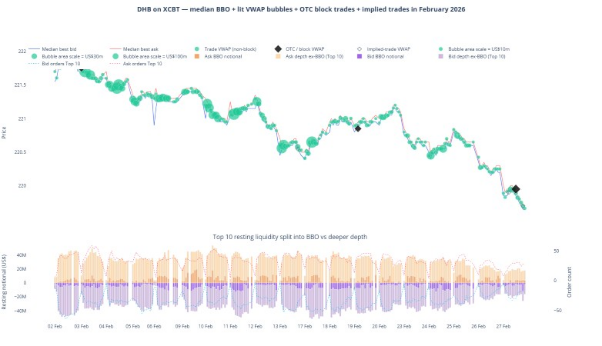
On CME’s most active product, tracking US investment grade duration hedged, in February, only three block trades happened for less than 1.5% of the US$4.4 billion total notional traded. Its average daily notional volume to open interest (turnover ratio) was 92%.
In February 2026, CME’s US dollar credit futures traded US$522 million in average daily volume (ADV) with US$689 million in open interest (OI), up 177% and 368% year on year, respectively, with a turnover ratio of 0.76.
Cboe’s iBoxx iShares suite printed US$435 million ADV and US$1.99 billion OI, up 166% and 139% from February 2025. By comparison, its turnover ratio was 0.22.
Eurex’s euro contracts saw €110 million ADV, down 44% year on year (YoY), on €3.1 billion of open positions, up 54% from a year earlier. Eurex’s US dollar products traded US$47.6 million ADV, down 69% year on year, while open interest rose 57% to US$270 million. Sterling contracts remained small, with £2.8 million ADV and £12.8 million OI. The contracts’ turnover ratios range from 0.04 for the euro-denominated complex to 0.22 for sterling-denominated instruments.
CME’s credit futures have a high turnover ratio, trading mostly on exchange
After January’s step-up in volume and OI, CME stayed strong in February. ADV across the complex eased from January’s US$624 million to US$470 million but remained far above the US$183 million traded in February 2025. Open interest slipped from January’s US$682 million to US$506 million but was still more than three times last year’s US$144 million.
The Bloomberg U.S. Corporate Investment Grade Duration Hedged Index futures, DHB, contract remained the most traded and carried vehicle in the CME complex. in February. DHB traded US$229 million ADV and held US$247 million in open interest, versus US$57.7 million and US$28.6 million respectively in February 2025. The turnover ratio for DHB went from 2.01 to 0.93. DHB is designed to isolate investment-grade credit exposure while hedging out much of the underlying rates duration.
Credit futures on CME also exhibit very different trading patterns to the ones we analysed on Eurex, where most trading is now done via request for quote (RFQ) and block-sized trades, reflecting the European trading norms in credit.
Read more: Eurex sees lit credit future liquidity migrate to dark
ForDHB, resting size at the best bid and offer was relatively thin, but the first 10 price levels on both sides regularly held materially more size deeper in the book. According to market sources, the imbalance between sizes offered or bid, as well as the number of orders in the book, reflects evolving axes for market participants and market makers. Sources told The DESK that this stems from the incentives offered to market makers on CME. CME declined to specify what the incentives are and has filed a FOIA Confidential Treatment Request to protect them.
Another interesting feature of the market is that hardly any block trades happened, suggesting little block roll activity ahead of the mid-March expiry for the contract.
This has remained a feature of CME’s credit futures since launch, with high central limit order book activity, high turnover ratio, low blocks, and low open interest in comparison to the same metrics on the credit futures complex at Eurex and Cboe.
Market sources have suggested this may indicate the activity is driven by trading firms seeking to take advantage of trading rebates, rather than investment firms using the contracts to manage risk.
CME declined to answer requests for comments.
Eurex OI keeps building
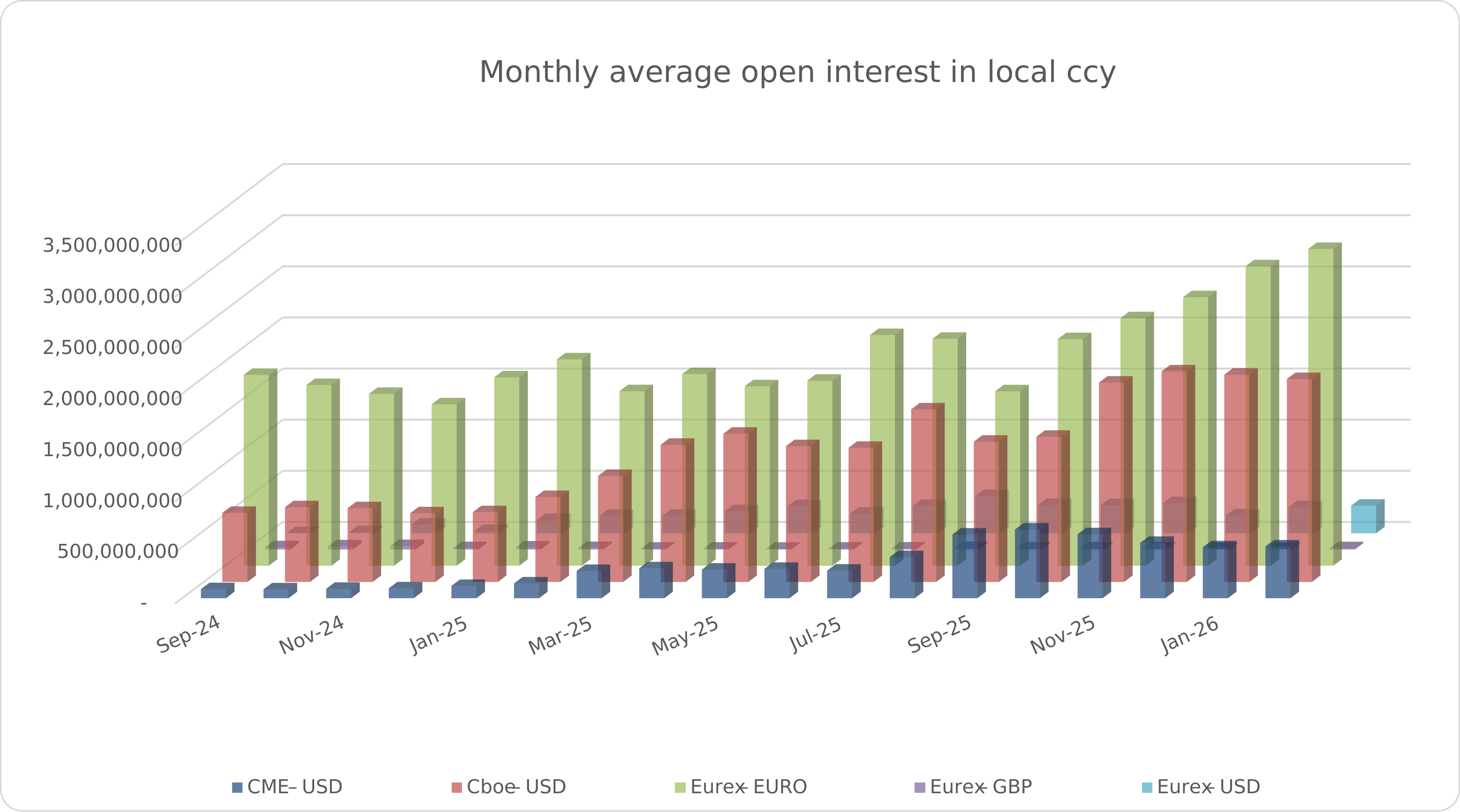
In Euros, Eurex’s Bloomberg MSCI-based credit futures again extended their growth in open interest while turnover remained muted. February ADV across the euro contracts rose slightly from January’s €105 million to €110 million, but was still far below the €197 million traded in February 2025. Average open interest, by contrast, climbed further to €3.10 billion from €2.93 billion in January and €2.02 billion a year earlier.
That divergence between OI growth and low relative volume remains one specific feature of the Eurex credit future complex. Euro open interest is still growing, but the volume response has not followed up in February. The same pattern is true in dollar-denominated Eurex contracts, where open interest rose to US$270 million while ADV stayed below US$50 million.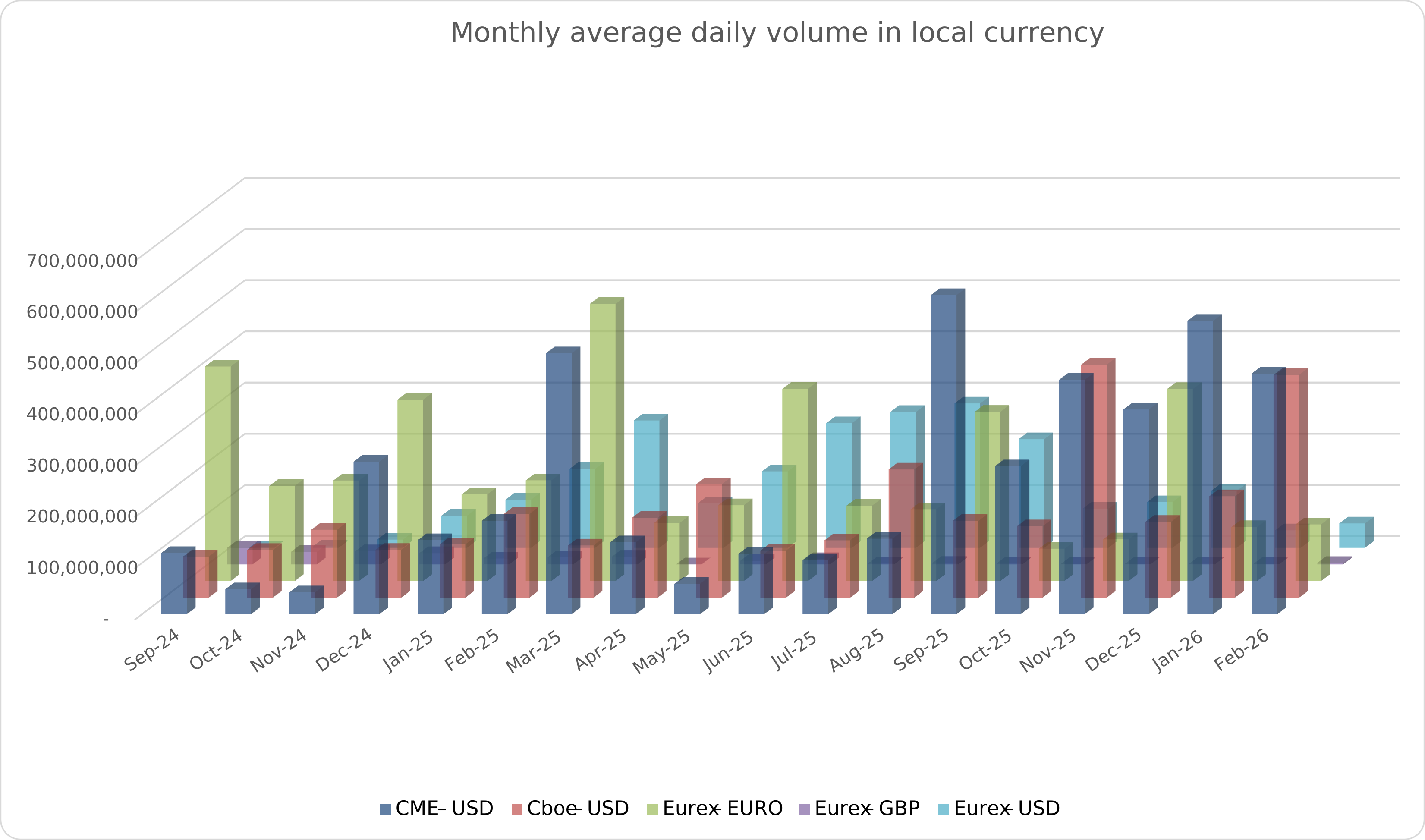
Cboe ADV surge as contracts roll
Cboe had the largest February ADV growth. ADV jumped to US$435 million from US$198 million in January and US$164 million in February 2025. Open interest held near January levels at US$1.99 billion, versus US$831 million a year earlier.
The surge in ADV was to be expected as the Cboe’s credit future complex last trading day was on 27 February, and heavy roll activity took place in the month. From last year’s 0.24, Cboe’s turnover ratio eased slightly to 0.22.
©Markets Media Europe 2026