




The efficiency of electronic trading has trade-offs for blocks based on information disclosure, leakage and trust.
Electronifying execution of larger bond orders is the ‘holy grail’ for efficient trading, but despite a positive trend towards expansion, barriers still exist.
Electronic bond trade sizes are naturally growing as dealers become more comfortable increasing the risk they trade over platforms. Electronic channels are also evolving to allow newer ways of trading larger orders, while younger traders often step away from the phone and into ‘chat’ as a preferred medium of negotiation. These dynamics are creating a fertile environment for block trades to move onto trading platforms.
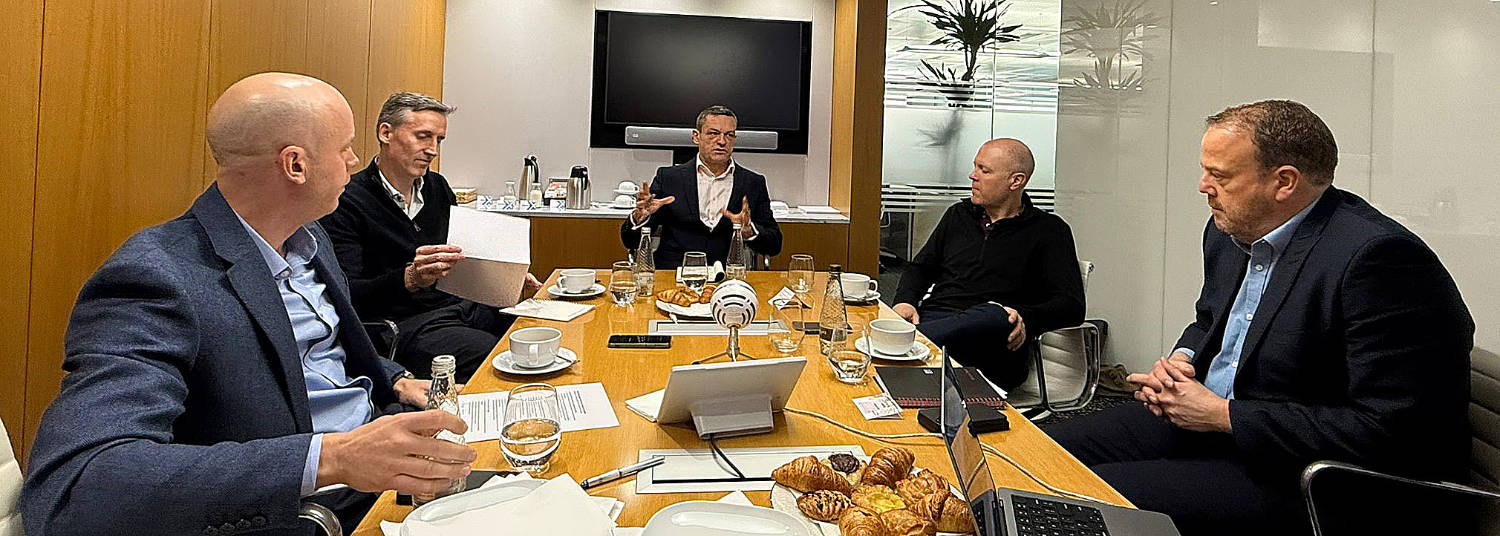
On 12 February 2026, The DESK, supported by MarketAxess, hosted a roundtable for buy-side traders to discuss the drivers for, and barriers to, electronifying block sized trades.
A block trade can be considered a large order which typically requires research pre-trade to identify available liquidity.
Orders for an investment grade bond of US$3-5 million or greater might broadly be considered necessary to be traded as a block, but a trader must take into account several other factors, including the difficulty of trading a particular issuer of a bond, market conditions at the time of trading, and the frequency of trading of that instrument.
Getting the best price is typically the main determinant of where to trade, as the need to trade quickly is less of an issue in bond markets than in equity markets, where price can move more quickly.
The trader must then decide whether to put multiple counterparties in competition (in comp) or to use a single counterparty (non-comp) who can be determined pre-trade to be the best source of liquidity for this specific block.

“We think there’s enough pre-trade analytics that we can frame where we should be trading pretty well in advance,” explains Dan Dewar, head dealer, fixed income at Invesco. “If everyone’s a buyer, we would be more tempted to open it up to several counterparties. If everyone’s a seller and the technicals are completely against you, that becomes a very different conversation. One that needs to involve the fund manager, to decide whether to sit tight or transact now, as well as the bank who we have identified as the best counterparty for trading that bond.”
The starting point for the trade is incredibly important, especially if banks are not actually warehousing risk. Buy-side desks need to determine the midpoint between the bid-ask spread, based on available pricing information, internal and external sources, and discussions with banks, to begin discussion.
Trade negotiations then take place across one of several potential mediums, each having their own strengths. Individual traders also have their own preference for how to start the discussion – such as giving a firm price as a starting point, or eliciting the price from the counterparty.
Electronic vs voice
Putting a large trade on a platform in competition can create the pressure on counterparties to trade that opportunity quickly and thereby deliver a good price, where a negotiation is potentially more able to be controlled by the bank.
On the other hand, the buy-side trader is able to gather more information during a negotiated trade – whether by telephone or by message – than would be given during an in-comp request for quote, and the level of control in a conversation can equally be controlled by the buy-side trader; this is the art of the negotiation.
The more direct the contact, the more information can be gauged; a voice conversation gives both parties direct access to the other party’s state of mind, urgency, and level of activity.

“A key objective when having a conversation with Trading or Sales is to extract maximum value from both price and liquidity negotiation,” says Shaun Copeman, senior credit and fixed income trader at Federated Hermes. “The conversation might evolve to seeking liquidity in related bonds if the liquidity in the target bond is constrained. Unfortunately, that’s not something that can easily be done electronically. Sometimes it’s important to get some skin in the game to alleviate time pressures to allow for more constructive conversations with both the Street and internal stakeholders.”
There is some scepticism that processed trades, which are negotiated voice/chat trades that are then input onto platforms to simplify post-trade reporting and processing, being reported as part of the fully electronic trading universe.
Although this could be increasing reported trade sizes with e-trading, platforms confirm that fully electronic trade sizes are growing.

“There’s a definite trend towards electrification of larger sizes,” says Gareth Coltman, head of product, EMEA and APAC at MarketAxess. “Historically every platform’s average size is somewhere close to $1 million. We have said anything over US$5 million in US HG or Euros is a block. Across all categories, year on year, our fully electronic volumes for trades over US$5 million grew 60% to January 2026. That was 35% across US dollar classes, 90% in Eurobonds and 92% in emerging markets. So that is definitely the direction of travel, across all protocols. Most of that growth actually came from people using all-to-all RFQ for larger size. We’ve introduced a ton of a lot of block specific protocols over the last 18 months which are starting to get used but as a general trend, people are getting more comfortable to do larger size on the platform.”
One clear catalyst for this change is the capacity that banks have to enhance their capability to turn over risk. That has grown over the last five years as a result of the technology they deploy, managing risk books across algorithmic trading, portfolio trading and the exchange traded fund (ETF) business, in addition to their connectivity via interdealer markets. In part this has been accelerated by electronic liquidity providers, who are crucially able to deliver almost continuous pricing in bonds that are indexed, as a result of the corelation with pricing of ETFs that track those indexes, and are priced on stock exchanges during trading hours.
Another catalyst is the tendency of younger traders to focus on electronic models of trading over telephone-based trading, and another is the increased data availability that come from e-trading, which begets more e-trading as a consequence, and facilitates larger, lower touch trades.
Moving to the next stage
Still, there are barriers to progress, and specially to lower touch electronic block trading as a preference to negotiating the trade.
The first is that dealer axes can still be unreliable, making it necessary for traders to feel their way through a trade.

“Electronic block liquidity depends on genuinely uncapped size coming through dealer axes,” says Jason Recordon, head of European fixed income trading at Janus Henderson. “That requires trust. And despite the drive to electronify larger trades, true block size still demands negotiation. Striking the right balance will be critical.”
“We have an axe reliability model that we’re testing at the moment,” notes Coltman, “We intend to make that available to clients and dealers. That would allow you as a human being to filter information based on that reliability score, with some level of granularity. Dealers’ behaviour tends to be pretty consistent across the domains or sectors. They’re typically either good or they’re not.”
Coltman notes that a new ‘live axe’ service creates a time limited axe for dealers to push to clients, encouraging firmer pre-trade information publication while limiting data leakage.
In European markets increased transparency through the new regulatory regime which supports consolidated tapes being delivered in Europe and the UK is likely to support pre-trade price formation.
“In theory, the consolidated tape should help block trading and help frame that pre-trade,” says Dewar. “But there’s definitely whole swathes of this market that will never go electronic. Let’s be frank about that.”
Another barrier is the limit to information sharing that occurs pre- and at-trade to via a low-touch model. New trading protocols and data offerings can continue to deliver better ways to electronify blocks where that is possible.
“We need protocols that look and smell more like bilateral voice workflows, and feel more familiar, more personalised,” Coltman says. “So you know who you’re talking to. There’s some element of colour that’s available through that process.”
Dewar adds, “The challenge is defining that tipping point between what’s always been traded electronically and what’s appropriate to put on there in the future. We’re just moving that conversation to a modern age, gauging what is appropriate to use as a block protocol for a platform and what isn’t.”
©Markets Media Europe 2026